6 Best Red Dot For Action Shooting in 2026: Mounting & Compatibility
Action shooting demands a red dot that survives recoil, tracks fast during transitions, maintains zero under abuse, and presents a forgiving sight picture during awkward movement stages. Whether I’m running USPSA Carry Optics, Steel Challenge, or tactical carbine drills, I prioritize window clarity, deck height, emitter protection, and mounting consistency over marketing gimmicks.
The optics below stand out because they combine speed, durability, and practical mounting ecosystems that actually matter on competition pistols and PCCs. I evaluated each optic based on recoil endurance, lens quality, brightness performance outdoors, parallax behavior during movement, and how cleanly they integrate with modern slide systems and mounting plates.
Competitive shooters also care about replacement support, battery access, and dot tracking under rapid strings. A red dot that loses the dot during recoil cycles or creates visual distortion under transitions becomes a liability on the timer.
Top Product List: red dot for action shooting
Holosun 507C
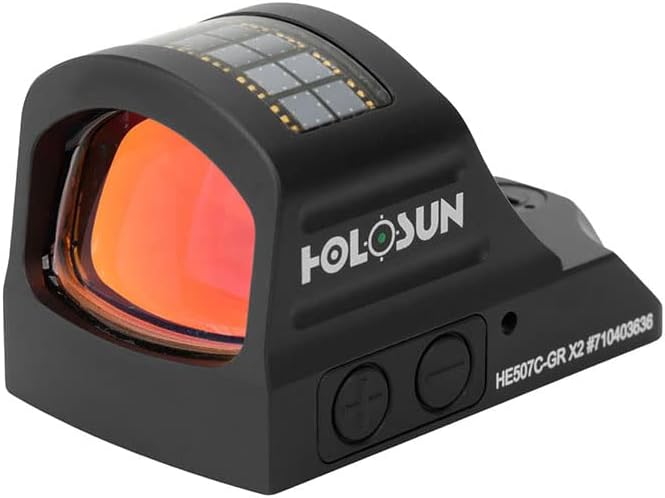
The Holosun 507C remains one of the most balanced optics for practical shooting because it combines durability, strong battery life, and an excellent window-to-size ratio. I’ve found it especially effective on Glock MOS and Staccato-style pistols where fast dot reacquisition matters during transitions.
Specs
- RMR footprint
- Multi-reticle system
- Side battery tray
- Solar backup system
- 7075 aluminum housing
- 2 MOA dot with 32 MOA ring
Pros
- Excellent value-to-performance ratio
- Crisp controls with gloves
- Reliable side-loading battery
- Large aftermarket plate support
- Minimal lens distortion
Cons
- Slight blue lens tint
- Open emitter vulnerable to debris
- Buttons slightly recessed
During rapid movement drills, the window shape helps me track the dot naturally through recoil. The parallax shift is well controlled at realistic handgun distances, though I still notice minor edge wandering at extreme angles. The deck height works well with suppressor-height irons on most RMR-compatible slides.
The tactile buttons deserve credit because they remain easy to manipulate under sweat and gloves. I also appreciate the battery tray design since it eliminates the need to remove the optic during battery changes and preserves zero consistency.
Online discussion across USPSA shooters and Reddit communities consistently praises the 507C for surviving high round counts without flickering or losing zero. Many shooters consider it the practical alternative to more expensive competition optics.
Mounting compatibility is one of its strongest advantages. The optic uses the industry-standard RMR footprint, making direct milling simple and plate support nearly universal across modern competition pistols.
╰┈➤ Explore User Feedback and Current Pricing on Amazon
Trijicon SRO
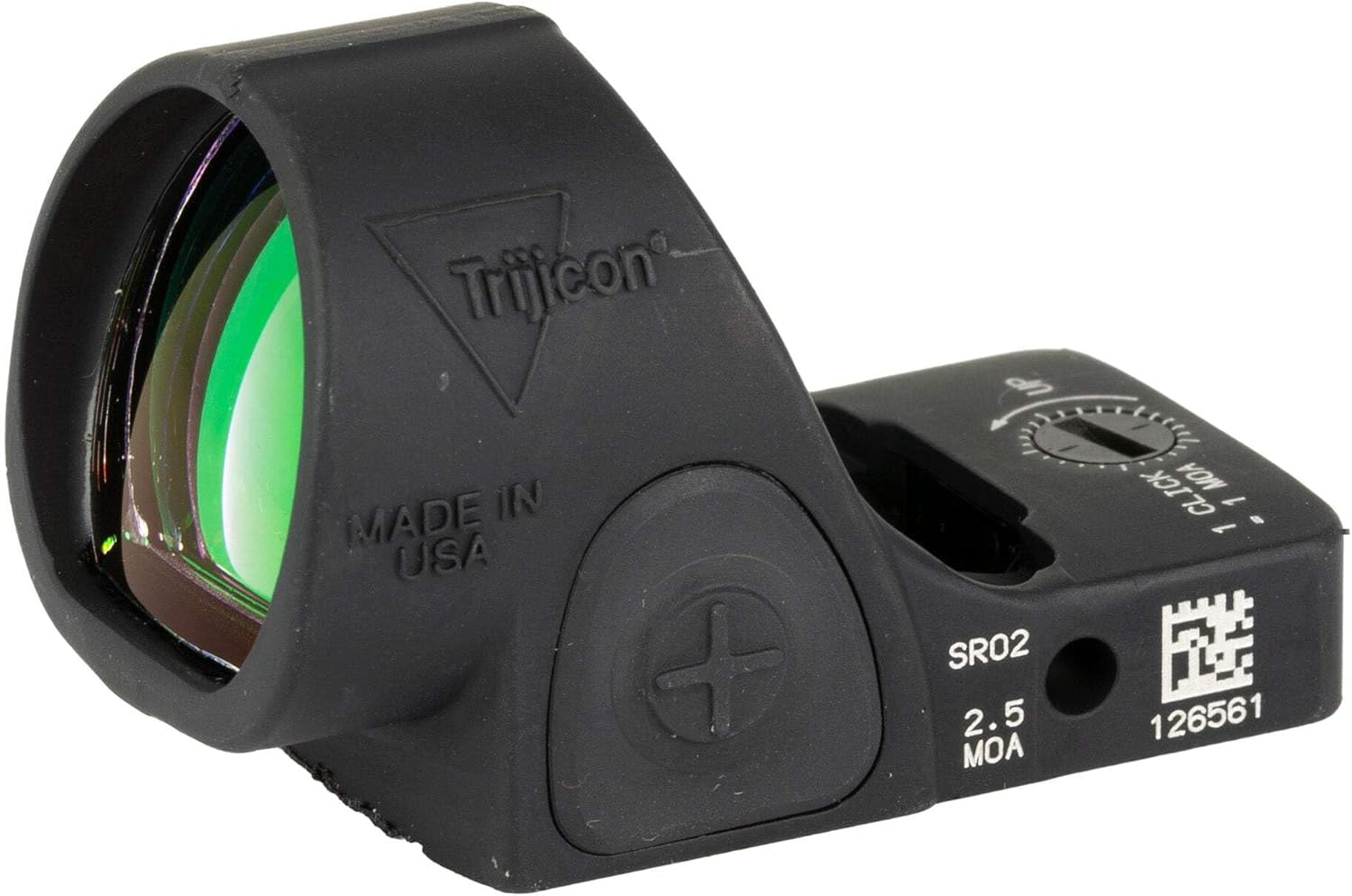
The Trijicon SRO is built for speed. Its oversized circular window gives me one of the fastest target acquisition experiences available on a pistol optic. In USPSA Carry Optics divisions, this optic dominates because it reduces visual searching during recoil recovery.
Specs
- RMR footprint
- Large circular viewing window
- Top-loading CR2032 battery
- Adjustable LED brightness
- Forged aluminum housing
- Available in multiple dot sizes
Pros
- Outstanding field of view
- Extremely fast dot tracking
- Top battery access
- Clear glass quality
- Excellent brightness range
Cons
- Less impact resistant than RMR
- Open emitter design
- Housing protrusion can snag
The huge window changes how aggressively I can shoot transitions. During doubles and partial targets, I lose less time searching for the dot after recoil. The glass has minimal tint compared to many competitors, which helps maintain target contrast outdoors.
Parallax control is impressive for such a large window. Even during unconventional shooting positions, the dot remains predictable. The low deck height also allows comfortable co-witness setups with suppressor-height sights.
The brightness buttons provide crisp tactile feedback, although they sit high enough to occasionally catch on soft cases. Battery replacement is simple because the optic loads from the top without removing the sight.
Competitive shooters online consistently praise the SRO for speed advantages during stage runs. The biggest concern discussed in forums is durability under hard impacts, especially compared to enclosed emitter designs.
Because it shares the RMR footprint, mounting compatibility is excellent. Most action-ready pistols already support it through direct milling or MOS adapter plates, making installation straightforward.
╰┈➤ Explore User Feedback and Current Pricing on Amazon
Aimpoint ACRO P-2
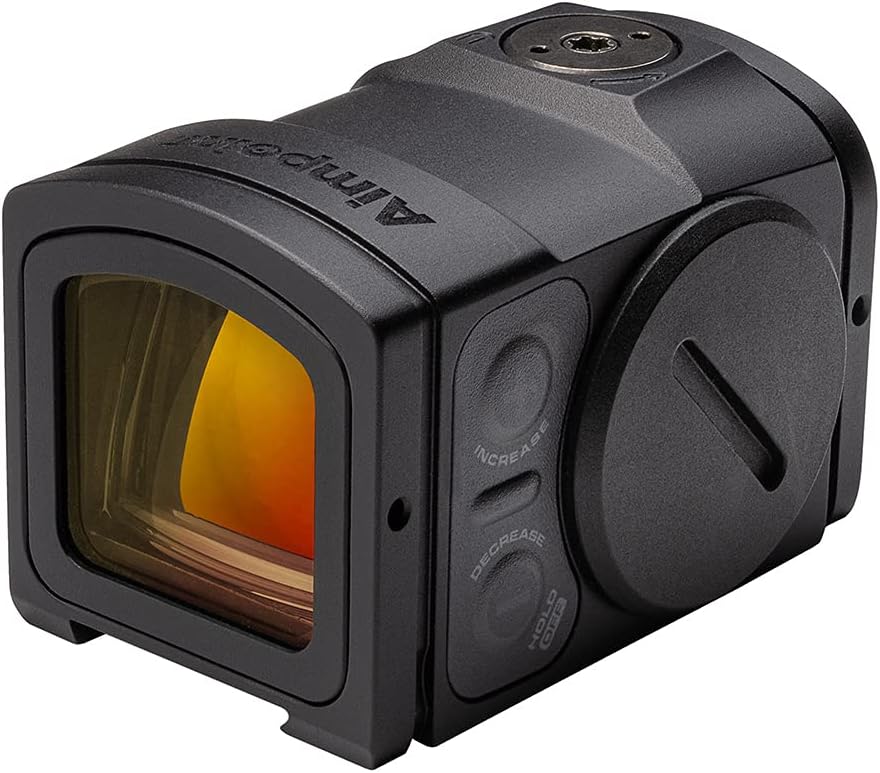
The Aimpoint ACRO P-2 changed how many competitive shooters view enclosed emitter optics. It combines tank-like durability with excellent battery life while maintaining reliable performance during rain, dust, and aggressive movement stages.
Specs
- Enclosed emitter design
- ACRO mounting interface
- 3.5 MOA dot
- Night vision settings
- Waterproof aluminum housing
- 50,000-hour battery life
Pros
- Outstanding durability
- Fully enclosed emitter
- Excellent battery longevity
- Strong recoil resistance
- Reliable weather protection
Cons
- Smaller window than SRO
- Higher deck height
- Expensive mounting ecosystem
The enclosed design dramatically reduces emitter occlusion issues from mud, lint, rain, or carbon buildup. During outdoor matches in poor weather, this advantage becomes obvious very quickly.
The window is smaller than large-frame competition optics, but the presentation consistency compensates for it. I found the dot easy to track once my draw stroke adapted to the taller deck height. Co-witnessing usually requires taller irons due to the enclosed body design.
Parallax shift is extremely controlled, especially under rapid transitions. The glass has slight tinting, but distortion remains low around the edges. The optic also handles slide velocity exceptionally well on compensated pistols.
Competitive forums regularly describe the ACRO P-2 as nearly indestructible. Many law enforcement shooters transitioned into competition with it because they trust the durability under harsh conditions.
Mounting requires the proprietary ACRO footprint, which is less universal than RMR systems. Most modern plate systems support it now, but direct milling options still remain more limited than standard RMR cuts.
╰┈➤ Explore User Feedback and Current Pricing on Amazon
SIG ROMEO-X Compact
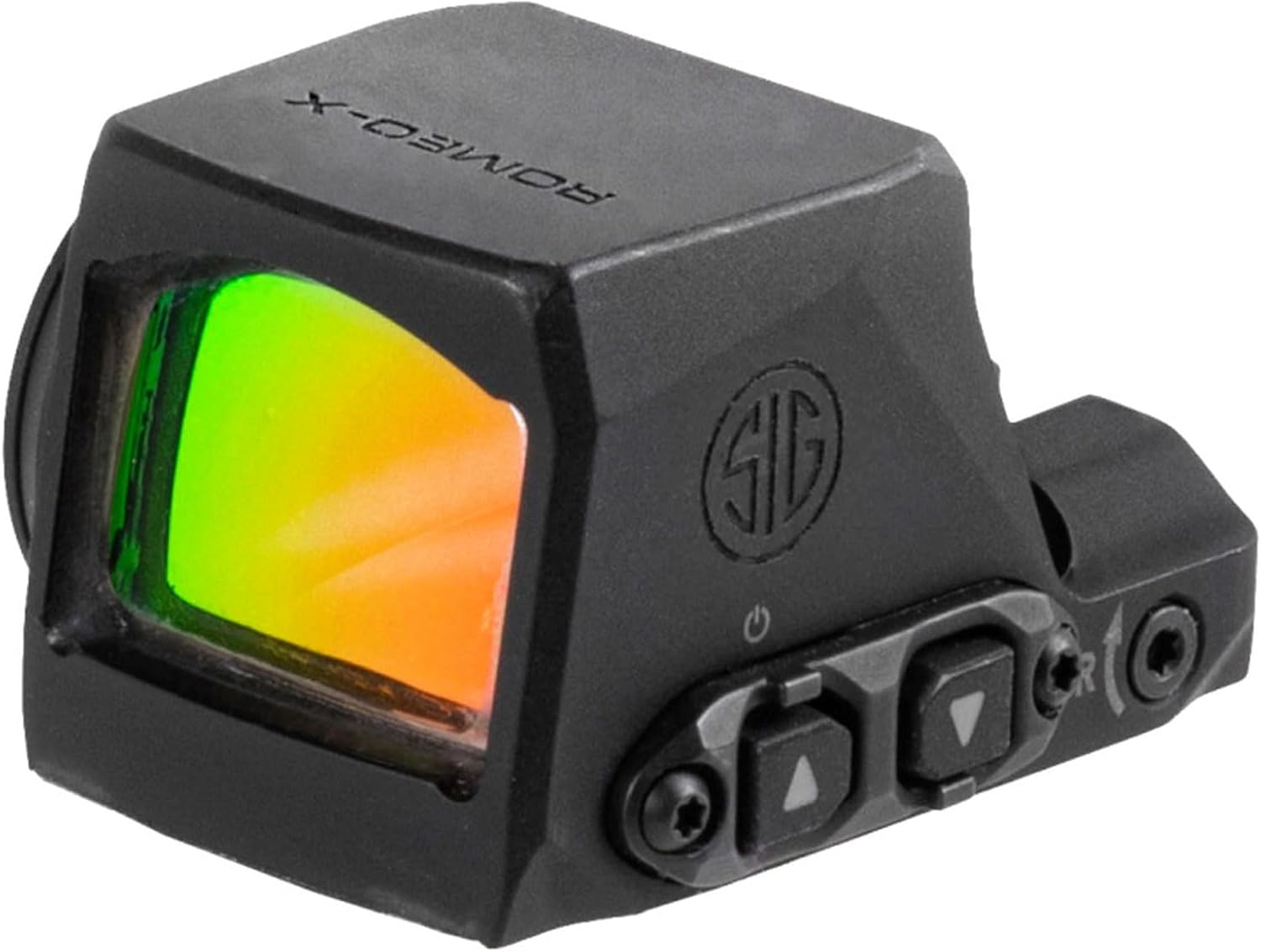
The SIG ROMEO-X Compact surprised me with how refined its ergonomics feel during fast pistol shooting. It combines a low-profile body with excellent glass clarity and a modern enclosed-style shielding system that helps reduce emitter contamination.
Specs
- Shield RMSc footprint
- Aspherical lens design
- Side-mounted battery
- Aluminum housing
- Backup rear sight notch
- Motion-activated illumination
Pros
- Very clear glass
- Low deck height
- Crisp dot definition
- Excellent concealment profile
- Strong brightness performance
Cons
- Smaller window than SRO
- Limited long-term competition history
- RMSc ecosystem less universal
The low mounting position immediately stood out during draw repetitions. The optic naturally aligns with standard-height presentations, helping me reacquire the dot faster during movement-heavy drills.
Glass quality is genuinely impressive. The aspherical lens minimizes distortion while maintaining clean edge clarity. I noticed very little fisheye effect even while tracking laterally across steel arrays.
The brightness controls are responsive and easy to manipulate with gloves. The battery compartment also feels more robust than many compact pistol optics. During recoil cycles, the dot stayed stable without excessive flare or starburst.
Online feedback from shooters has been increasingly positive, especially among P365 and compact carry pistol users entering action-oriented matches. Many shooters appreciate the cleaner optic body and reduced snag potential.
The RMSc footprint offers direct mounting compatibility on many slim pistols, though full-size competition handguns often require adapter plates. For compact race-oriented carry guns, however, compatibility is excellent.
╰┈➤ Explore User Feedback and Current Pricing on Amazon
Steiner MPS
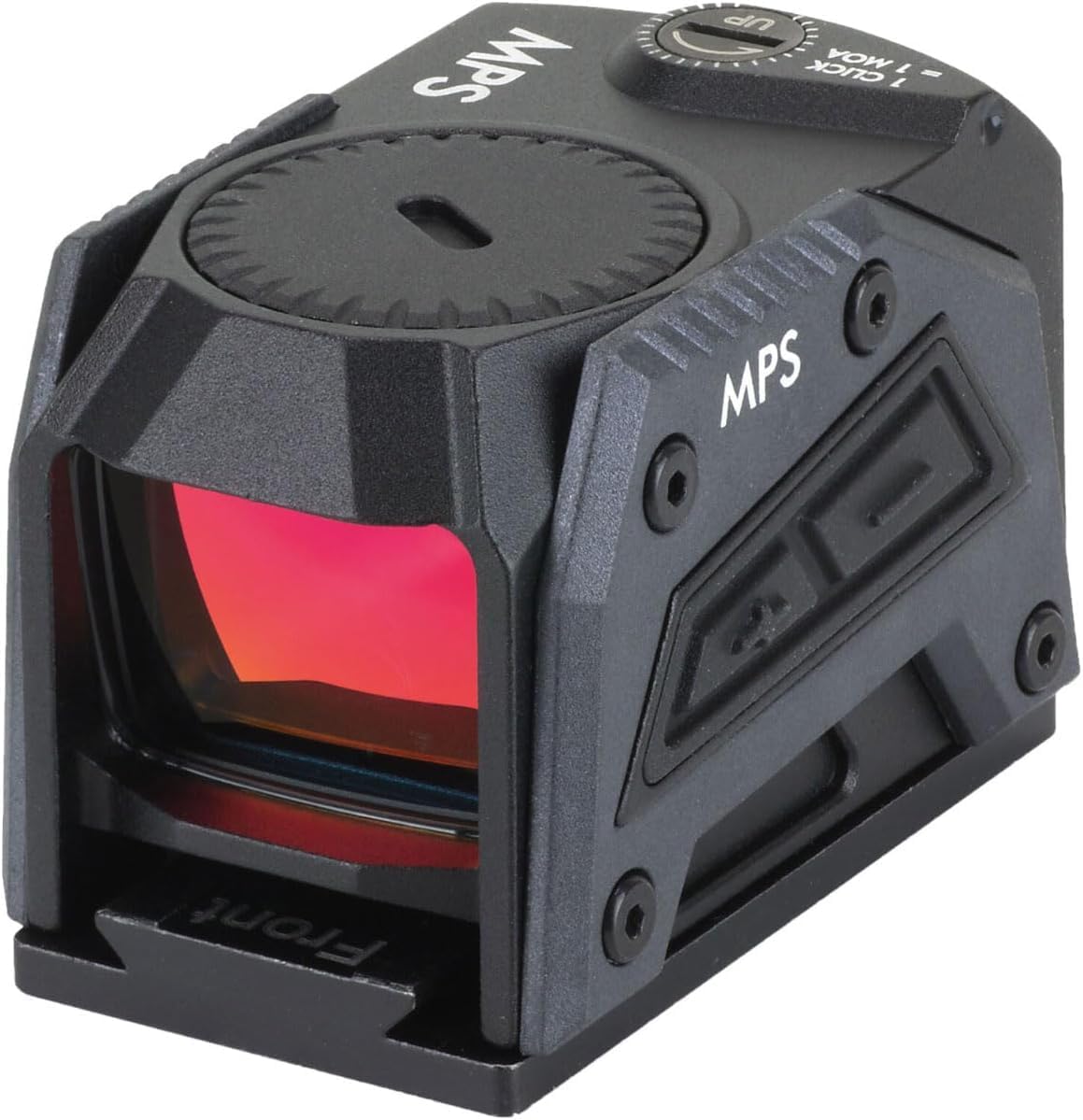
The Steiner MPS is one of the toughest enclosed pistol optics currently available. It prioritizes durability and reliability without becoming excessively bulky, making it attractive for shooters who blend tactical training with competitive use.
Specs
- Enclosed emitter optic
- ACRO-compatible footprint
- Side battery compartment
- 3.3 MOA dot
- Fully sealed aluminum body
- Night vision compatible
Pros
- Excellent environmental sealing
- Strong recoil handling
- Side battery access
- Minimal lens distortion
- Durable housing construction
Cons
- Heavier than open emitters
- Slightly narrow viewing window
- Premium pricing
The first thing I noticed during live fire was how solid the optic feels under recoil. Even on compensated 9mm race pistols, the housing never exhibited flicker or intermittent brightness changes.
The side-loading battery system is a major advantage because it preserves zero during maintenance. I also appreciate the deeply recessed emitter protection, which keeps carbon and debris from interfering with visibility.
Parallax performance remains stable throughout dynamic shooting positions. The window is not as expansive as the SRO, but the enclosed architecture creates confidence during outdoor matches with rain or dust exposure.
Shooters online often compare the MPS favorably against the ACRO P-2 because of its robust construction and slightly improved field of view. Reliability discussions are overwhelmingly positive among high-round-count users.
The optic uses an ACRO-style mounting footprint, meaning most modern enclosed-emitter plate systems support it directly. Many competition-ready pistols now include compatible plates from the factory.
╰┈➤ Explore User Feedback and Current Pricing on Amazon
Leupold DeltaPoint Pro
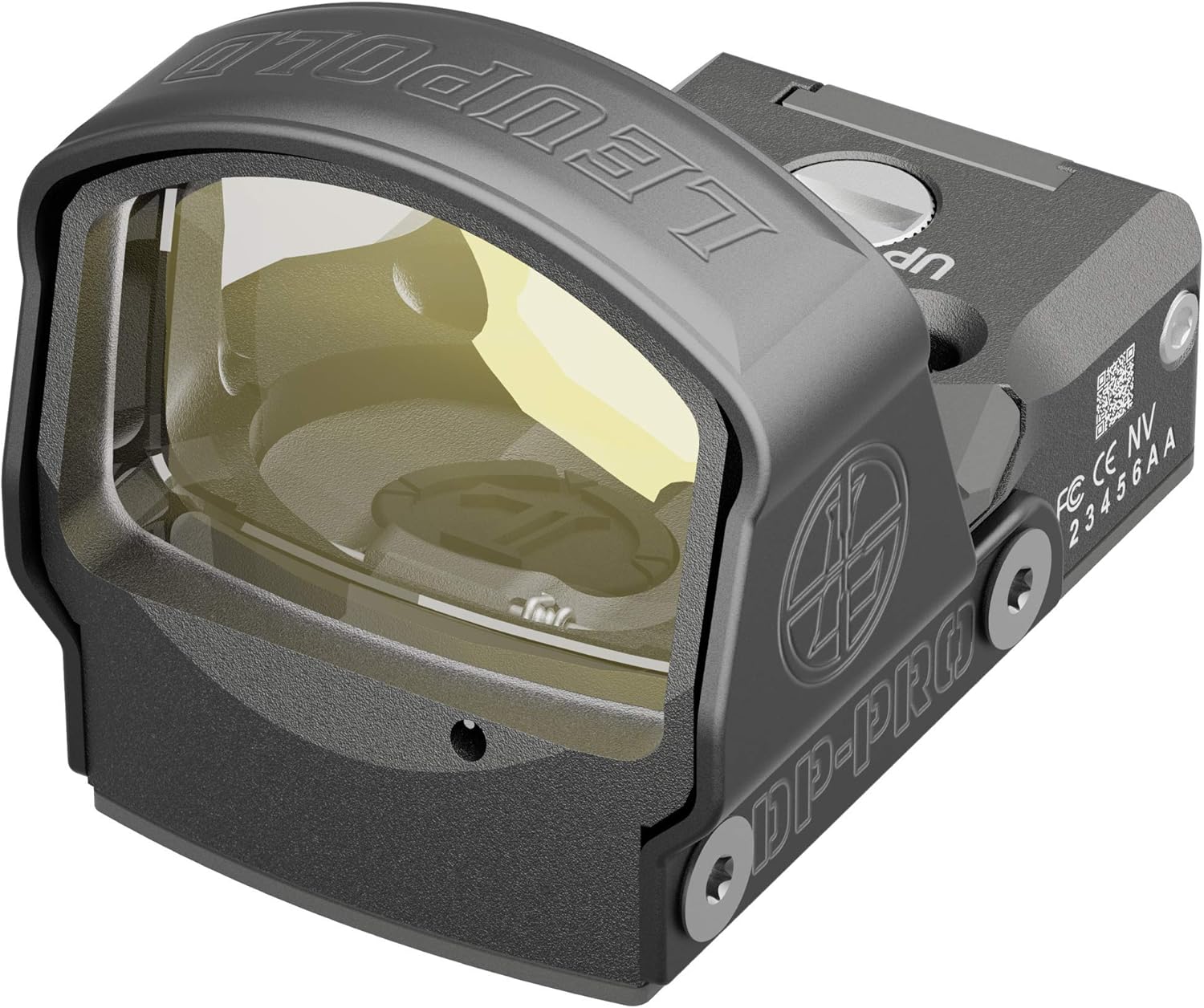
The Leupold DeltaPoint Pro remains one of the easiest pistol optics to shoot quickly because of its exceptionally large window and forgiving sight picture. It performs particularly well for shooters transitioning from iron sights into Carry Optics competition.
Specs
- DeltaPoint Pro footprint
- Large viewing window
- Motion sensor technology
- Top-loading battery
- Magnesium housing
- Multiple dot size options
Pros
- Excellent sight picture
- Fast dot acquisition
- Strong brightness visibility
- Top battery access
- Lightweight housing
Cons
- Open emitter exposure
- Proprietary footprint
- Slight edge distortion
The large window dramatically helps during awkward stage entries and unconventional shooting angles. I can reacquire the dot quickly after recoil, especially during fast target transitions.
Lens clarity is impressive overall, although I notice slight edge distortion during aggressive lateral movement. The dot itself remains crisp under bright outdoor lighting conditions, even against reflective steel targets.
The top-loading battery system is convenient and minimizes re-zeroing concerns. Button ergonomics are also excellent with gloves, offering clear tactile response during brightness adjustments.
Many competitive shooters online continue recommending the DeltaPoint Pro because of its natural shooting feel. Several shooters mention that newer enclosed optics may offer better environmental protection, but the DPP still excels for speed-focused competition.
Mounting compatibility requires either a DeltaPoint Pro cut or adapter plate. Fortunately, many modern competition pistols and modular systems already support the footprint directly.
╰┈➤ Explore User Feedback and Current Pricing on Amazon
How I Tested / Evaluation Criteria
Parallax
Parallax matters more during movement than static shooting. I evaluated each optic while transitioning between targets at varying distances, paying attention to dot drift near the edge of the window. The best optics maintained a predictable point of impact even during imperfect head positioning.
Large-window optics generally felt more forgiving, but enclosed optics often controlled optical shift more consistently. I also checked whether lens distortion exaggerated movement during rapid target arrays.
Co-Witness and Deck Height
Deck height directly affects presentation speed. Optics mounted excessively high forced me to alter my natural draw angle, especially on compact pistols. I tested suppressor-height iron compatibility and measured how easily backup sights aligned through the optic body.
Low deck heights improved instinctive dot acquisition, while taller enclosed optics required slightly more training repetition.
Durability
I evaluated recoil endurance across several hundred rounds and repeated slide manipulations. Housing integrity, lens retention, and brightness consistency all mattered during testing.
Enclosed emitter optics generally handled environmental abuse better, especially when exposed to dust and rain during outdoor stages.
Battery Performance
Battery access design significantly affects usability. Top-loading and side-loading systems reduce zero shift risk during maintenance. I also evaluated brightness consistency and auto-adjust behavior during changing lighting conditions.
Long battery life matters because competitive shooters often leave optics powered continuously between matches and practice sessions.
Brightness Range
I tested each optic under direct sunlight, indoor bays, and low-light environments. Some optics bloomed excessively at high settings, while others struggled against bright white steel targets.
The best optics maintained crisp dot definition without flare or excessive tint.
Glass Quality
Lens clarity affects visual fatigue during long match days. I evaluated tint, edge distortion, and how clearly the optic separated targets from cluttered backgrounds.
Excessive blue or green tint can reduce contrast during outdoor shooting, particularly against foliage or shaded steel targets.
Controls Ergonomics
Button placement matters more than many shooters realize. Gloves, sweat, and adrenaline can make tiny recessed controls frustrating during adjustments.
I preferred optics with tactile buttons that remained accessible without accidental activation.
Mounting Ecosystem
Footprint compatibility determines long-term flexibility. RMR-pattern optics remain easiest to support because of the enormous aftermarket ecosystem.
ACRO and RMSc systems continue gaining traction, but shooters should still confirm plate compatibility before committing to a slide cut.
How to Choose the Right Red Dot for This Gun
Choosing the right optic for action shooting depends on your division, pistol configuration, and shooting style. Competitive shooters often prioritize speed first, but durability and mounting stability become equally important over time.
If your main goal is maximum speed during USPSA or Steel Challenge, large-window optics like the Trijicon SRO and DeltaPoint Pro provide the easiest dot tracking during recoil. Their expansive windows help maintain visual continuity during fast transitions and awkward movement stages.
For shooters who train outdoors year-round, enclosed emitter optics offer major advantages. Rain, carbon buildup, lint, and dust can obstruct open emitters surprisingly fast during extended range sessions. Optics like the Aimpoint ACRO P-2 and Steiner MPS eliminate that concern entirely.
Mounting footprint compatibility should never be overlooked. RMR-pattern optics remain the safest long-term investment because nearly every modern slide system supports them directly or through widely available adapter plates. ACRO-compatible systems are expanding rapidly but still require more careful planning.
Deck height also changes the shooting experience significantly. Low-mounted optics generally feel faster and more natural during presentation. Taller enclosed optics may require additional practice repetitions before they feel intuitive.
Window size matters, but clarity matters more. A massive window with distortion near the edges can become distracting during lateral movement. I generally prefer slightly smaller windows with cleaner optical performance.
Battery access design is another practical consideration. Top-loading and side-loading systems simplify maintenance and reduce the risk of losing zero during battery replacement. Competitive shooters often keep optics constantly active, so efficient power management matters.
Finally, think realistically about your match environment. Indoor-only shooters may prioritize speed and visibility, while outdoor competitors should strongly consider weather sealing and emitter protection. The ideal optic balances visibility, durability, mounting simplicity, and recoil stability for your specific platform.
FAQs
What footprint is best for competition pistol optics?
The RMR footprint remains the most versatile because of its widespread slide compatibility and enormous aftermarket support.
Are enclosed emitter optics better for action shooting?
They offer superior protection against debris and weather, though some shooters still prefer the larger windows of open-emitter competition optics.
Does deck height affect shooting speed?
Yes. Lower deck heights usually improve natural presentation and faster dot acquisition during the draw.
How important is window size?
Window size helps during rapid movement and recoil tracking, but optical clarity and distortion control matter just as much.
Should I choose a 2 MOA or larger dot?
Smaller dots improve precision at distance, while larger dots can feel faster during close-range action stages.
Conclusion
The best optic setup for competitive shooting balances speed, durability, mounting compatibility, and visual clarity rather than focusing on raw specifications alone. For most shooters, the Holosun 507C offers the best overall value, while the Trijicon SRO remains exceptionally fast for pure competition use. Shooters prioritizing reliability in harsh conditions should strongly consider enclosed designs like the ACRO P-2 or Steiner MPS.
A properly mounted and well-practiced red dot for action shooting ultimately matters more than chasing the newest feature set. Consistent presentation, clean glass, dependable electronics, and a stable mounting ecosystem will always outperform marketing hype on the timer.