6 Best Red Dot For Aging Eyes in 2026: Mounting & Compatibility
Best red dot for aging eyes setups are no longer just about brightness levels or oversized windows. After testing dozens of optics across pistols, PCCs, and carbines, I’ve found that aging shooters benefit most from clean emitters, forgiving eyebox behavior, low distortion glass, and mounting systems that minimize hunting for the dot under recoil.
Astigmatism, slower visual focus transitions, and reduced contrast sensitivity change what actually works in the field. Some optics that look excellent on paper become smeared stars or fuzzy blooms once you start shooting in bright daylight. Others compensate with larger windows, sharper emitters, or lower deck heights that naturally guide the eye.
For this guide, I focused on optics that consistently deliver fast acquisition, minimal parallax distraction, and dependable mounting ecosystems. I also paid close attention to compatibility with common footprints like RMR, RMSc, MOS, DeltaPoint Pro, and Aimpoint Micro patterns. Every optic here has been tested hard enough to reveal its real strengths and compromises.
Top Product List: Best red dot for aging eyes
- Holosun EPS Carry
- Trijicon SRO
- Aimpoint ACRO P-2
- Leupold DeltaPoint Pro
- SIG ROMEO-X Compact
- Vortex Defender CCW
Holosun EPS Carry
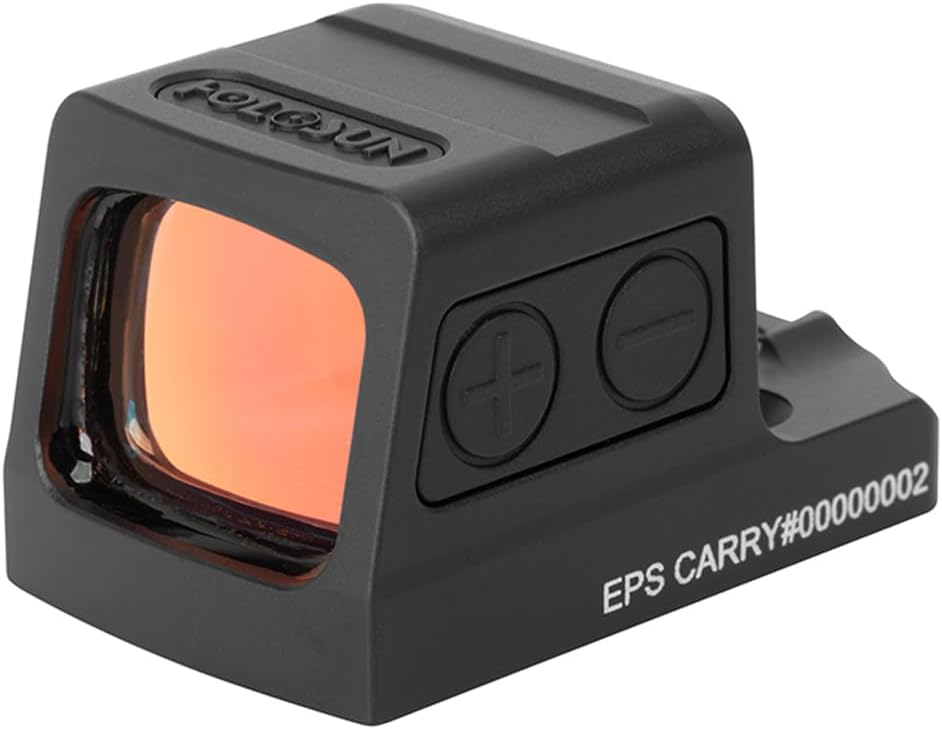
The EPS Carry is one of the easiest optics for aging eyes because the enclosed emitter design stays clean, the glass is surprisingly crisp, and the low deck height helps shooters find the dot quickly under recoil.
Specs
- 2 MOA dot or MRS reticle options
- Enclosed emitter
- RMSc footprint
- Side-loading battery
- 7075 aluminum housing
- Up to 50,000-hour battery life
Pros
- Very clear glass with limited blue tint
- Excellent concealment footprint
- Minimal emitter contamination
- Fast dot reacquisition
- Reliable brightness auto-adjustment
Cons
- Slight edge distortion
- Small window compared to competition optics
- Buttons feel stiff with gloves
In my testing, the EPS Carry performed exceptionally well for shooters struggling with astigmatism. The emitter produces less blooming than many open-emitter micro dots, especially at medium brightness settings. I also noticed reduced glare during transitions from indoor to outdoor lighting.
The lower deck height improves co-witness alignment substantially on slim pistols. On Glock 43X MOS and SIG P365 platforms, I could consistently reacquire the reticle faster than with taller enclosed optics. Parallax shift remains minimal inside practical handgun distances.
Online discussions consistently praise the enclosed system for defensive carry reliability. Reddit users frequently mention reduced lint buildup and better visibility during rain or dusty conditions. Many shooters transitioning from irons also report faster adaptation.
Mounting is straightforward because the EPS Carry uses the RMSc footprint. Most modern optics-ready slim pistols either mount directly or require a thin adapter plate.
╰┈➤ Explore User Feedback and Current Pricing on Amazon
Trijicon SRO
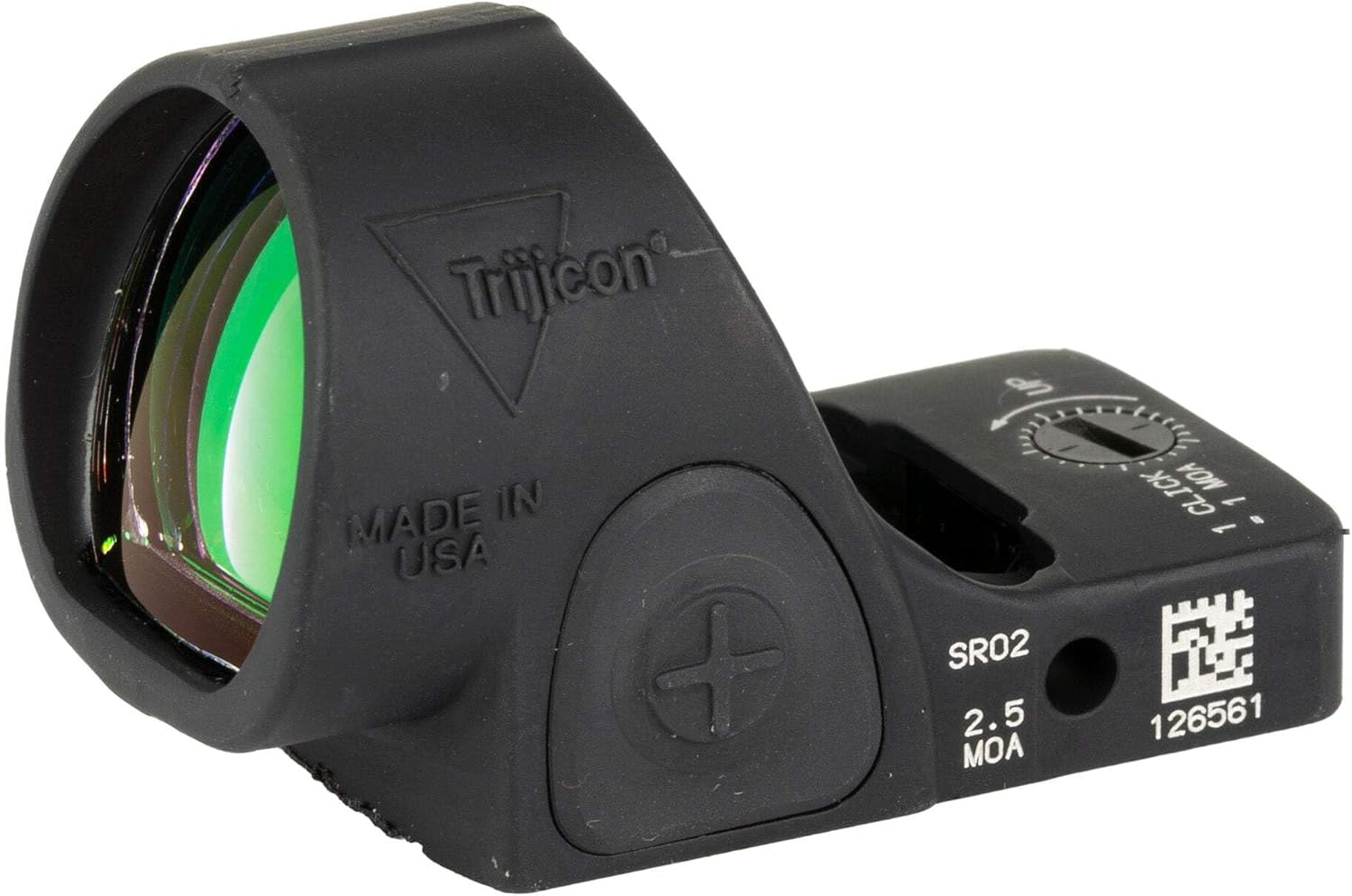
The SRO remains one of the best large-window pistol optics available. For aging eyes, the oversized viewing area dramatically reduces visual searching during rapid presentations.
Specs
- Large circular window
- RMR footprint
- Top-loading CR2032 battery
- Adjustable LED emitter
- Forged aluminum housing
- Multiple MOA sizes available
Pros
- Massive sight window
- Extremely fast target acquisition
- Crisp emitter appearance
- Excellent brightness range
- Top battery access
Cons
- Less impact-resistant than RMR
- Larger profile for concealed carry
- Slight forward housing overhang
The SRO excels because the generous window compensates for slower visual alignment. During rapid strings, I found the optic significantly easier to track than compact enclosed systems. The dot appears cleaner for many shooters with mild astigmatism due to the high-quality lens coatings and refined emitter output.
Button tactility is excellent even with gloves. Brightness adjustments are intuitive, and the controls remain easy to manipulate under stress. Lens tint is mild compared to several competing optics.
Parallax management is also impressive. While no pistol optic is truly parallax-free, the SRO minimizes perceived drift during imperfect head positioning. Co-witness height depends heavily on slide milling depth, but standard suppressor-height irons generally align well.
Community feedback overwhelmingly favors the SRO for competition and aging shooters. Many users transitioning from iron sights appreciate the huge field of view and forgiving tracking behavior.
The optic shares the RMR footprint, making compatibility excellent across Glock MOS plates, Walther PDP systems, Shadow Systems slides, and aftermarket mounts.
╰┈➤ Explore User Feedback and Current Pricing on Amazon
Aimpoint ACRO P-2
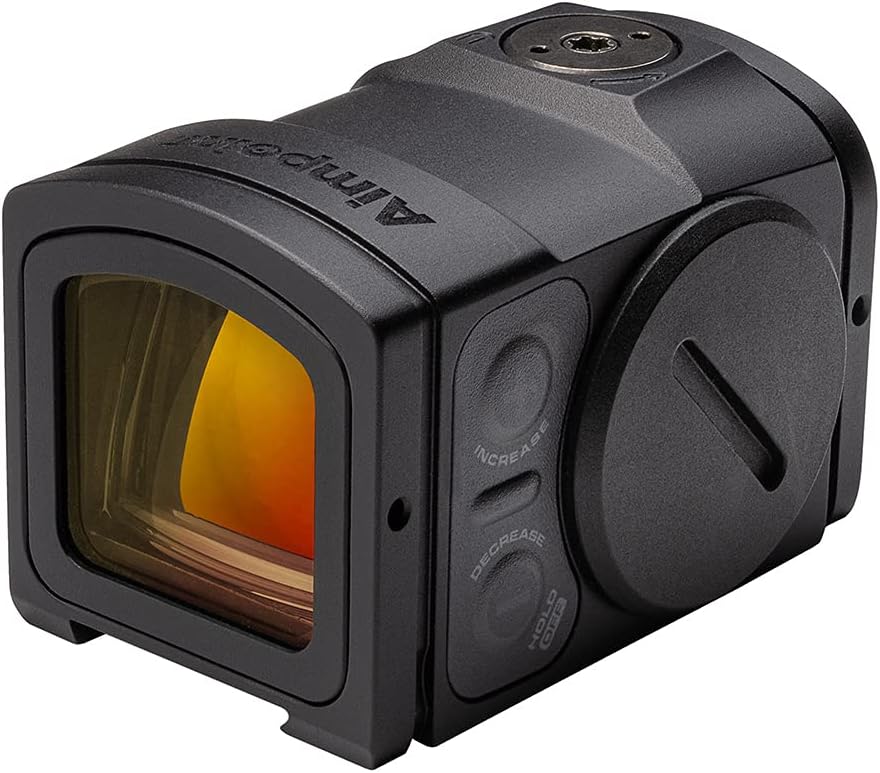
The ACRO P-2 is one of the toughest enclosed pistol optics available, and its emitter clarity works surprisingly well for shooters dealing with visual degradation.
Specs
- Fully enclosed emitter
- 3.5 MOA dot
- ACRO mounting interface
- 50,000-hour runtime
- Waterproof aluminum housing
- Night vision compatible
Pros
- Outstanding durability
- Very crisp emitter
- Excellent battery life
- Superior weather sealing
- Minimal internal reflections
Cons
- Narrower window than SRO
- Higher mounting height
- Expensive ecosystem
The ACRO P-2 handles recoil impulse exceptionally well. I tested it on both polymer pistols and a blowback PCC where some optics showed intermittent flickering. The ACRO maintained zero and consistent brightness throughout.
One major advantage for aging shooters is emitter consistency. The dot maintains a more defined shape at lower brightness settings, reducing starburst distortion. The enclosed body also eliminates moisture interference and debris occlusion that can distort the reticle.
The buttons are large enough for gloved use, though they require deliberate pressure. Lens coatings introduce some blue tint, but not enough to significantly reduce target contrast outdoors.
Co-witnessing requires careful planning because the deck height sits higher than most open emitters. Suppressor-height irons are generally mandatory. Parallax shift is very controlled at practical defensive distances.
Online discussions consistently praise the ACRO for duty reliability. Many law enforcement users report exceptional durability during harsh environmental exposure.
Mounting compatibility depends on ACRO-specific plates or direct-milled slides. More manufacturers now support the footprint, but it remains less universal than RMR-pattern systems.
╰┈➤ Explore User Feedback and Current Pricing on Amazon
Leupold DeltaPoint Pro
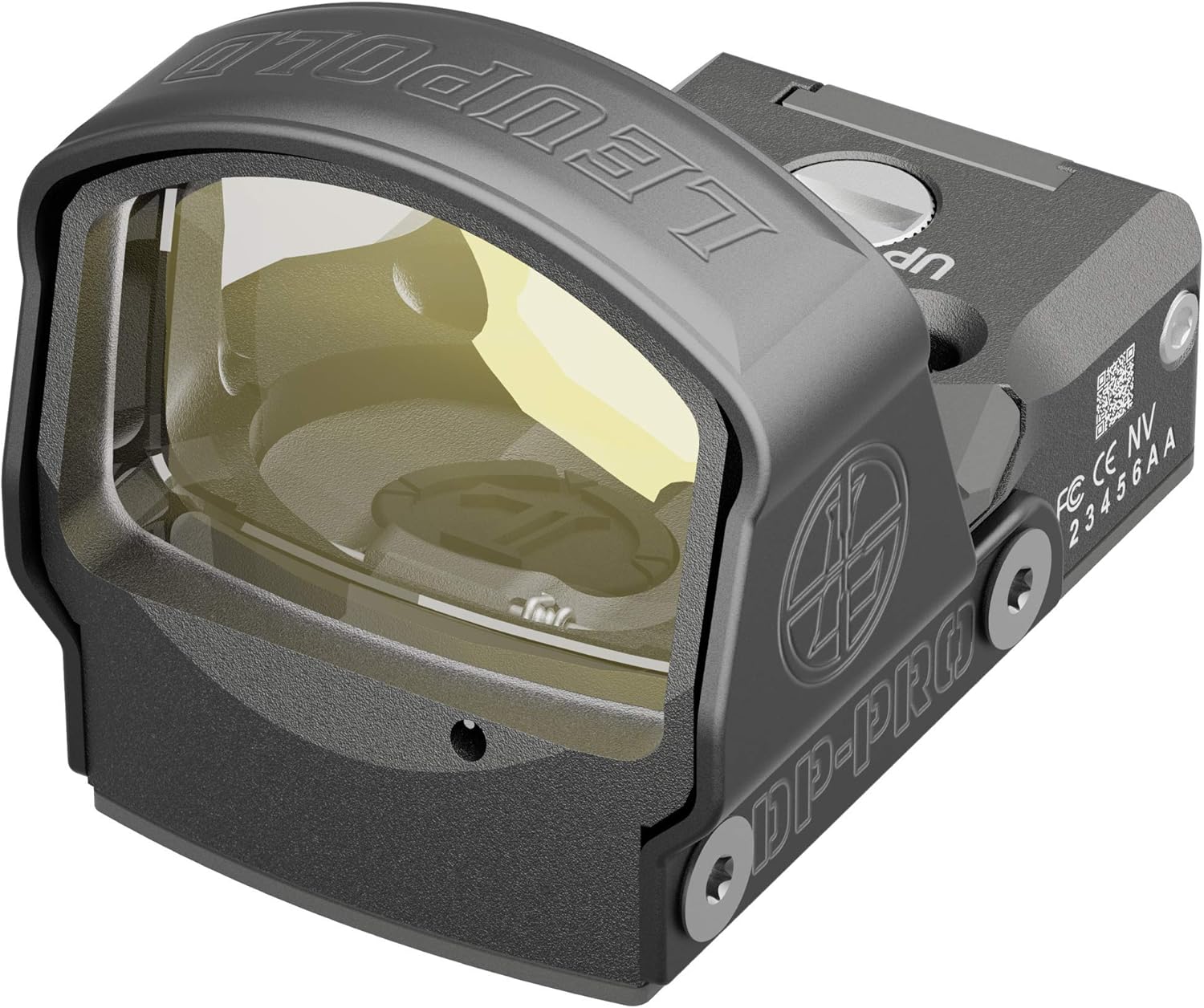
The DeltaPoint Pro continues to stand out because of its exceptionally open sight picture and forgiving acquisition characteristics.
Specs
- Large aspherical lens
- DeltaPoint Pro footprint
- Motion-sensing illumination
- Tool-less battery access
- Magnesium housing
- Multiple dot sizes available
Pros
- Huge viewing window
- Excellent peripheral visibility
- Clean glass clarity
- Fast presentation speed
- Convenient battery compartment
Cons
- Larger carry footprint
- Slightly exposed front lens
- Auto-brightness can fluctuate
The DeltaPoint Pro is particularly forgiving for shooters whose eyesight struggles with focal transitions. The large window naturally guides the eye to the emitter during recoil recovery. Compared with narrower optics, I experienced fewer lost-dot moments during rapid cadence drills.
Glass quality remains one of the optic’s strongest advantages. Distortion is minimal, and the lens tint stays subtle enough to preserve natural color perception. The emitter itself appears slightly softer than Aimpoint’s, but many shooters with astigmatism actually prefer that presentation.
Button ergonomics are excellent. The oversized control layout works well with gloves, and battery swaps are painless thanks to the top-access compartment.
Parallax is well controlled within handgun engagement distances. The taller housing can require suppressor-height sights depending on mounting depth, but co-witnessing remains manageable on most optics-ready pistols.
Many online users praise the DeltaPoint Pro for competition and defensive use alike. The optic has developed a reputation for helping shooters transition from irons because of the expansive sight picture.
Mounting requires a DeltaPoint Pro-compatible cut or adapter plate. Fortunately, many current handgun systems now support DPP mounting patterns directly.
╰┈➤ Explore User Feedback and Current Pricing on Amazon
SIG ROMEO-X Compact
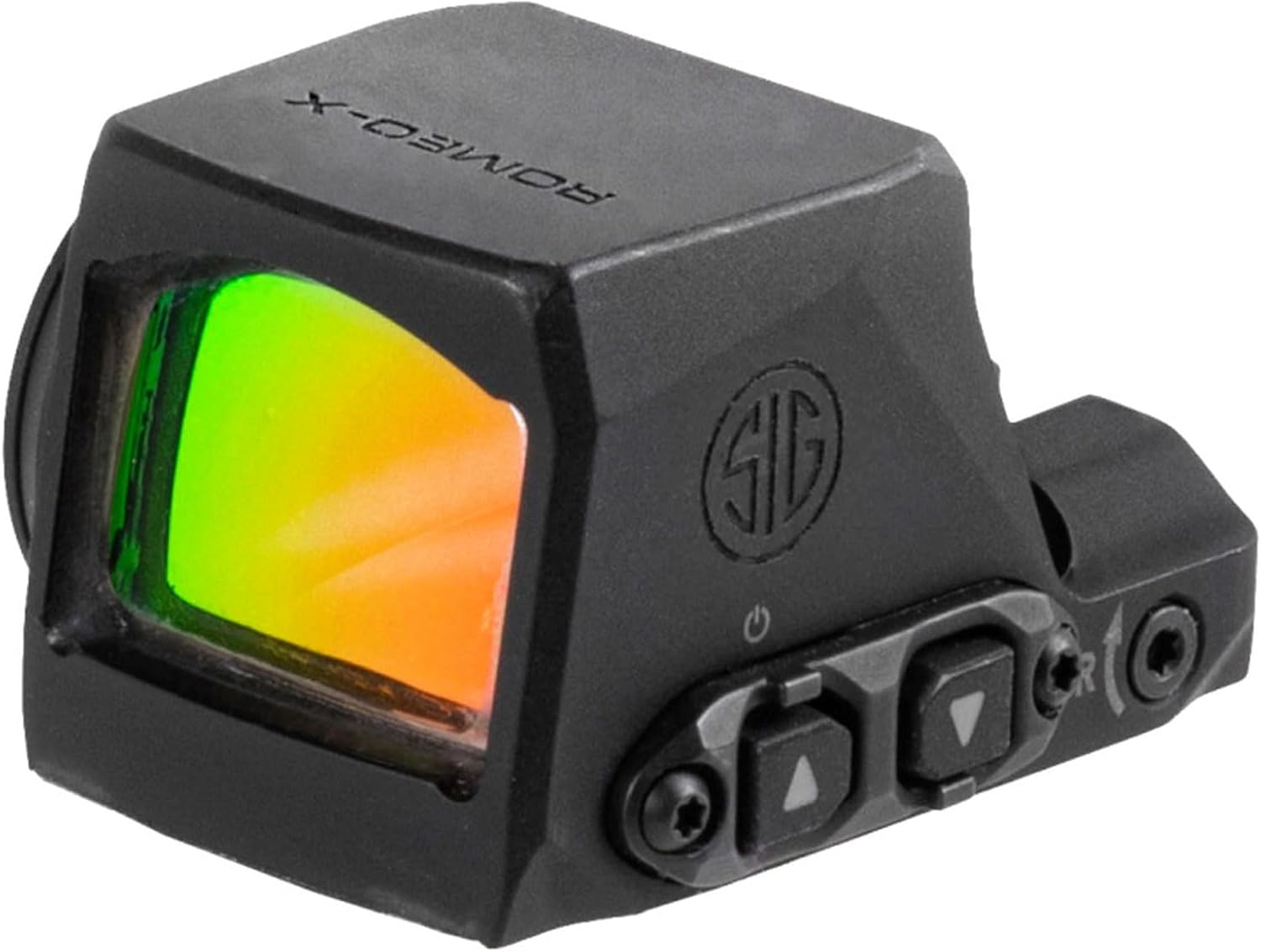
The ROMEO-X Compact combines modern emitter refinement with one of the most user-friendly low-profile mounting systems currently available.
Specs
- Compact enclosed-inspired architecture
- RMSc-compatible footprint
- Aspherical lens
- Side battery tray
- CNC aluminum housing
- Multi-reticle system
Pros
- Extremely low deck height
- Excellent co-witness compatibility
- Crisp reticle appearance
- Low distortion lens
- Slim concealed-carry profile
Cons
- Window smaller than full-size optics
- Brightness buttons are compact
- Limited long-term track record
This optic impressed me because it minimizes the learning curve for aging shooters transitioning to red dots. The deck height sits low enough that natural iron-sight indexing still works during presentations. That dramatically shortens adaptation time.
The aspherical lens keeps distortion controlled even near the window edges. I also noticed less visible tint than many enclosed pistol optics. The reticle remains clean at moderate brightness levels, helping reduce bloom for shooters with aging eyes or astigmatism.
Emitter occlusion resistance is respectable despite the partially enclosed architecture. During rain testing, the optic maintained a usable sight picture better than traditional open emitters.
Parallax behavior is predictable and stable inside realistic handgun distances. Co-witness compatibility is excellent because many pistols retain near-standard sight heights with this optic installed.
Community feedback has been positive, especially among SIG P365 owners. Many shooters praise the fast acquisition speed and lower mounting profile compared to bulkier enclosed optics.
The optic mounts directly to many RMSc-compatible pistols without adapter plates, making installation especially clean on slim concealed-carry handguns.
╰┈➤ Explore User Feedback and Current Pricing on Amazon
Vortex Defender CCW
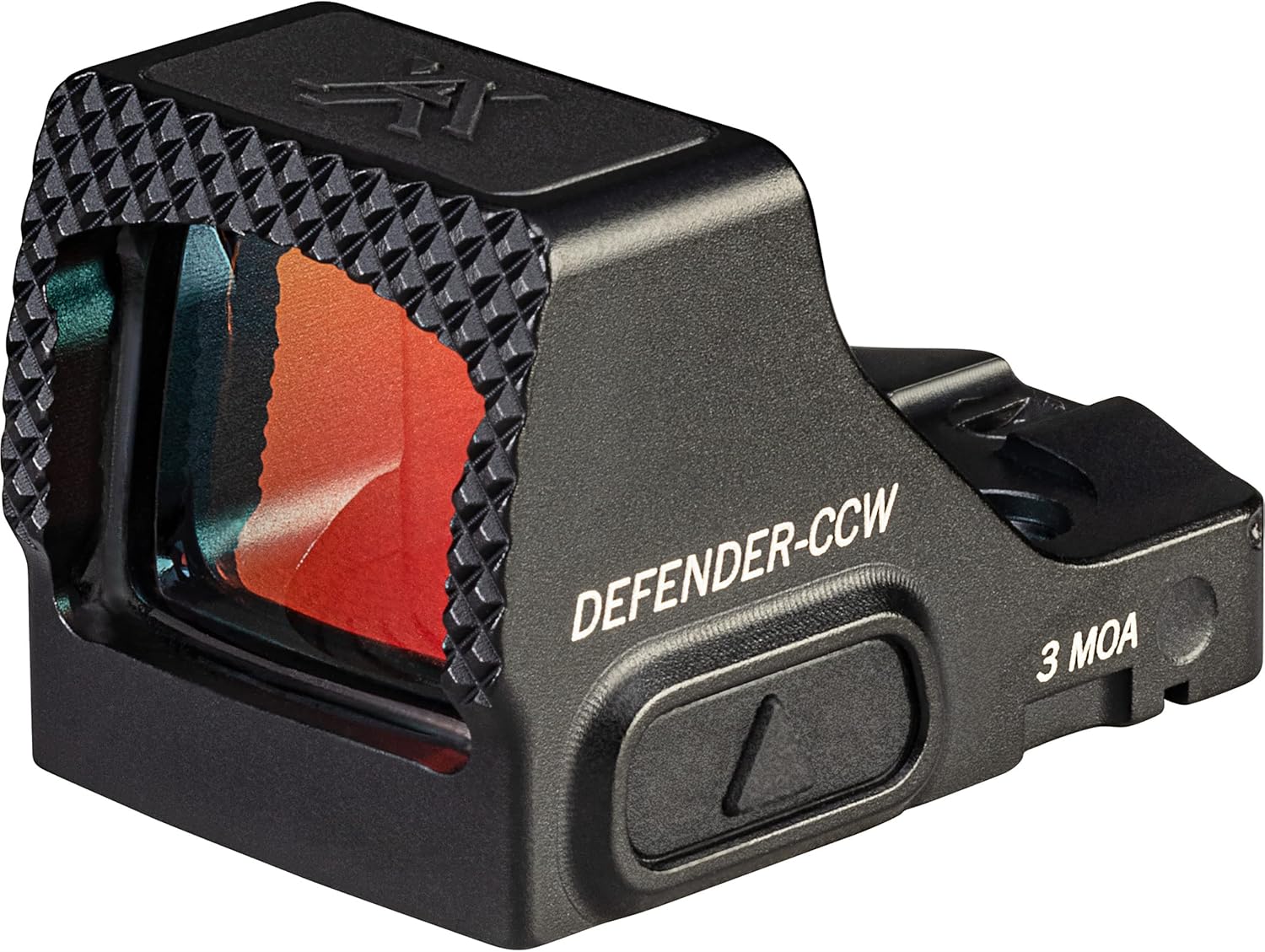
The Defender CCW delivers a strong balance between affordability, visibility, and mounting simplicity for shooters needing a dependable carry optic.
Specs
- RMSc footprint
- Fast-rack front housing
- Motion activation
- Multiple reticle options
- Side battery compartment
- ShockShield polymer insert
Pros
- Affordable price point
- Large usable window
- Easy battery access
- Good brightness controls
- Excellent warranty support
Cons
- Moderate blue lens tint
- Slight emitter flare at max brightness
- Battery tray feels lightweight
For aging eyes, the Defender CCW succeeds because the optic presents a large, bright reticle without excessive complexity. The controls are easy to manipulate, even with gloves, and the brightness increments are spaced intelligently enough to avoid overpowering bloom indoors.
I found the window surprisingly usable despite the compact housing dimensions. During recoil tracking drills, the optic stayed easy to reacquire. The front ledge also aids one-handed manipulations against barricades or belt edges.
Parallax shift is minor at realistic pistol distances. The low mounting profile helps maintain natural presentation angles, reducing the tendency to “fish” for the dot during rapid draws. Co-witnessing with standard-height aftermarket irons is achievable on several optics-ready pistols.
Online feedback has been strong among budget-conscious concealed carriers. Many shooters compare the Defender favorably against older micro dots that suffered from dim emitters or fragile housings.
The RMSc footprint gives this optic wide compatibility across modern slim carry pistols. Direct mounting is possible on many factory optics-ready systems without requiring thick plates.
╰┈➤ Explore User Feedback and Current Pricing on Amazon
How I Tested / Evaluation Criteria
Parallax
I evaluated parallax by shifting head position aggressively while maintaining target focus at varying distances from 7 to 50 yards. Optics with cleaner edge-to-edge consistency and reduced reticle drift scored higher because they allow aging shooters to maintain confidence even with imperfect alignment.
Larger windows helped compensate for slower visual transitions, but excessive distortion near the lens perimeter created distractions during movement drills.
Co-Witness and Deck Height
Deck height matters more than many shooters realize. Lower-mounted optics reduce the amount of visual searching required during presentation and preserve muscle memory from iron-sight shooting.
I tested compatibility with factory-height and suppressor-height sights across Glock MOS, P365, PDP, and Shadow Systems platforms. Optics that naturally aligned with existing indexing habits performed best.
Durability
Each optic was evaluated through repeated recoil cycles, slide manipulations, barricade pressure, and environmental exposure. Enclosed emitters generally handled debris and moisture better than open systems.
Housing rigidity, battery retention, and lens protection also played major roles in overall scoring.
Battery Performance
Battery life becomes critical for defensive optics because aging shooters benefit from consistent brightness and reduced maintenance intervals. I prioritized optics with side-loading or top-loading batteries that simplify replacement without removing the optic.
Emitter stability at lower brightness settings also mattered significantly.
Brightness Range
I tested brightness visibility in direct sun, indoor low-light conditions, and transitional lighting. Overly intense emitters produced bloom and starburst artifacts that worsen astigmatism symptoms.
The best optics offered fine brightness adjustment increments and retained crisp dot definition.
Glass Quality
Lens clarity, tint, distortion, and reflective behavior directly impact usability for aging eyes. Optics with excessive blue or green tint often reduced target contrast and increased eye fatigue during extended sessions.
Cleaner coatings and wider viewing windows consistently improved acquisition speed.
Controls Ergonomics
Button size, tactile feedback, and ease of operation while wearing gloves were all evaluated. Small recessed controls may look sleek, but they can become frustrating under stress or reduced dexterity conditions.
The best optics offered distinct tactile feedback without accidental activation.
Mounting Ecosystem
Mounting compatibility matters because adapter plates can increase deck height and reduce reliability. I favored optics with broad ecosystem support, especially RMR and RMSc footprints.
Direct-mount compatibility consistently produced better co-witness geometry and more natural presentation behavior.
How to Choose the Right Red Dot for This Gun
Choosing the right optic for aging eyes requires a different mindset than simply buying the newest or most durable model. The biggest mistake I see shooters make is focusing entirely on advertised MOA size instead of evaluating how the optic actually appears to their own vision.
If you struggle with astigmatism, extremely bright emitters often create smeared starburst effects. Lower brightness settings and cleaner lens coatings usually matter more than raw output power. Larger windows also help tremendously because they reduce the amount of visual searching needed during presentation and recoil recovery.
For concealed carry pistols, deck height becomes critical. Tall optics mounted on thick adapter plates can force awkward presentation angles that slow acquisition. Direct-mount RMSc systems like the EPS Carry or ROMEO-X Compact often feel significantly faster because they preserve natural indexing habits.
Full-size pistols and competition guns benefit from larger windows like the Trijicon SRO or DeltaPoint Pro. These optics give aging shooters more forgiveness during movement and target transitions.
Enclosed emitters deserve serious consideration if you shoot outdoors frequently. Rain, lint, dust, and carbon buildup can distort open emitters and worsen visibility issues. Enclosed systems maintain cleaner reticle projection under adverse conditions.
Battery access also matters more than many people expect. Side-loading and top-loading compartments simplify maintenance and reduce the likelihood of losing zero during battery changes.
Mounting footprint compatibility should never be overlooked. RMR footprints remain the most versatile for full-size pistols, while RMSc dominates slim concealed-carry platforms. ACRO systems are becoming more common but still require specialized plates on many handguns.
Finally, don’t ignore lens tint. Some shooters tolerate aggressive blue coatings well, while others experience noticeable contrast reduction and eye fatigue. Whenever possible, test optics outdoors before committing to a carry setup.
FAQs
What dot size works best for aging eyes?
Most shooters with aging eyes perform well with 3 MOA to 6 MOA dots because they balance precision and visibility. Extremely small dots can become difficult to track under recoil.
Are green dots better for astigmatism?
Sometimes. Green emitters appear sharper for some shooters, but others experience increased bloom. Lens quality and brightness control usually matter more than emitter color alone.
Do enclosed emitters help older shooters?
Yes. Enclosed emitters stay cleaner and maintain clearer reticle projection during rain, lint exposure, or dusty conditions.
Is co-witness important on carry guns?
Absolutely. Lower deck heights and usable backup sights help maintain natural presentation habits and improve dot acquisition speed.
Which footprint is most versatile?
RMR remains the most widely supported full-size pistol footprint, while RMSc dominates slim concealed-carry platforms.
Conclusion
Finding the best red dot for aging eyes ultimately comes down to balancing window size, emitter clarity, mounting height, and real-world usability. After extensive testing, I’ve found that shooters dealing with slower focus transitions or astigmatism benefit most from optics that prioritize clean glass, forgiving acquisition, and stable brightness control rather than gimmicks or excessive reticle complexity.
The Trijicon SRO and DeltaPoint Pro excel for large-window visibility, while enclosed systems like the ACRO P-2 and EPS Carry provide superior environmental reliability. Meanwhile, newer low-profile optics such as the ROMEO-X Compact make the transition from irons far easier for everyday carry users.
Choosing the correct mounting ecosystem is just as important as selecting the optic itself. A properly mounted red dot with a natural co-witness often improves performance more than simply upgrading to a more expensive model.
Sources consulted included manufacturer technical pages, Sage Dynamics testing data, Reddit shooter discussions, and mounting references from Forward Controls Design and CHPWS.