6 Best Red Dot for P365 in 2026: Mounting & Compatibility
Best Red Dot for P365 setups have become dramatically better in 2026 because optic manufacturers finally understand how critical deck height, recoil handling, and footprint compatibility are on micro-compacts. The SIG P365 remains one of the most popular concealed carry pistols ever made, but choosing the wrong optic can create mounting headaches, poor co-witness, excessive overhang, or unreliable zero retention.
I’ve spent years testing optics on slim carry guns, and the P365 platform is especially sensitive to optic dimensions. Tiny changes in housing width or emitter placement noticeably affect draw speed and target tracking. The factory optics-ready slides also complicate compatibility because older P365 slides use the Shield RMSc footprint while newer variants increasingly support modified footprints or direct mounting systems.
For this guide, I focused on optics that actually complement the P365’s strengths: fast presentation, concealability, manageable weight, and reliable defensive performance. I also prioritized optics with proven durability on reciprocating micro slides, sensible brightness controls, and mounting systems that minimize unnecessary adapter plates.
Top Product List: Best Red Dot for P365
HOLOSUN EPS CARRY
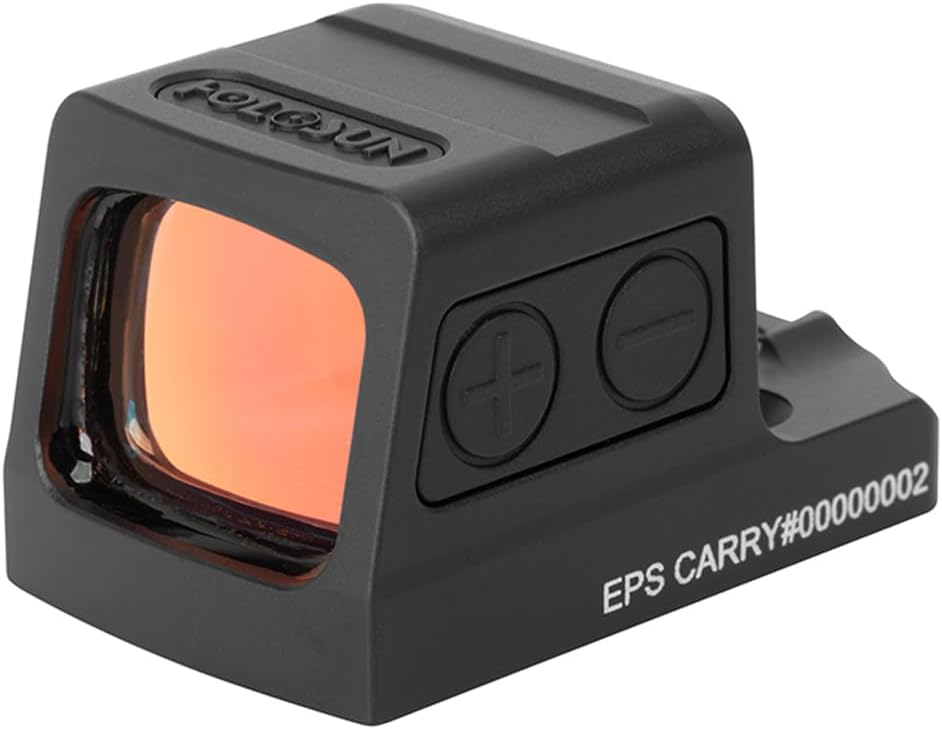
The EPS Carry is the optic I currently recommend most often for serious concealed carry P365 builds because it solves the biggest weakness of open-emitter carry optics: debris intrusion. The enclosed emitter design dramatically improves reliability during sweat, lint, rain, and pocket carry conditions while maintaining compact dimensions that still suit slim pistols.
Specs
- Enclosed emitter
- RMSc/K footprint
- 2 MOA dot or MRS variants
- Side battery tray
- Aluminum housing
- Multi-reticle system
- Shake Awake technology
Pros
- Excellent environmental sealing
- Very low deck height
- Crisp emitter with minimal bloom
- Outstanding battery access
- Excellent concealment profile
Cons
- Slight blue lens tint
- Window smaller than full-size optics
- Premium pricing
My hands-on experience with the EPS Carry has been overwhelmingly positive on the P365 XL and XMacro platforms. The optic tracks cleanly under recoil and exhibits very little parallax shift during unconventional shooting angles. The side-loading battery tray is a major advantage because I never have to remove the optic to swap batteries and risk losing zero.
The glass quality is excellent for a carry optic. There is some mild blue tint, but distortion around the edges is minimal compared to older micro red dots. I also noticed the recessed emitter window reduces washout when shooting from dark-to-bright transitions.
Button tactility is good even with gloves, though the controls are intentionally stiff enough to avoid accidental brightness changes during concealed carry. The optic sits low enough on most P365 optics-ready slides to allow usable factory-height iron sight co-witness.
Online discussions consistently praise the enclosed design and durability. Many P365 users specifically mention improved reliability during humid summer carry and reduced lint accumulation versus open emitters.
Mounting is straightforward because the optic uses the modified RMSc/K footprint common to modern P365 optics-ready slides. Most current P365 variants accept it directly without a plate.
╰┈➤ Explore User Feedback and Current Pricing on Amazon
HOLOSUN 507K
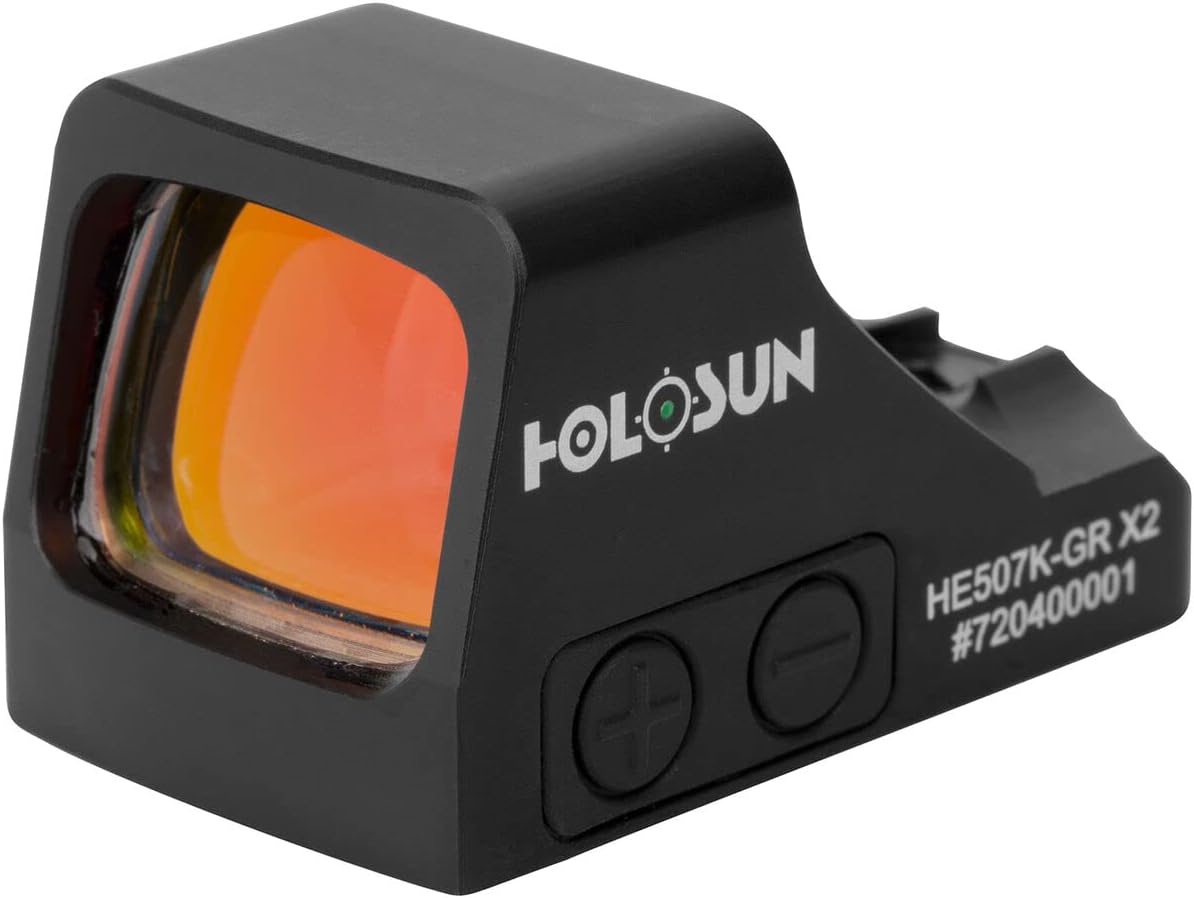
The 507K remains one of the best-balanced optics ever made for micro-compacts. It delivers excellent durability, a forgiving window, and versatile reticle options while preserving the concealability advantages that make the P365 attractive in the first place.
Specs
- Open emitter
- Modified RMSc footprint
- 2 MOA dot with 32 MOA circle
- Side buttons
- Aluminum construction
- Shake Awake
- 50,000-hour battery life
Pros
- Excellent reticle system
- Proven durability
- Compact footprint
- Good brightness range
- Strong aftermarket support
Cons
- Open emitter exposed to debris
- Slightly cramped controls
- Mild lens tint
I’ve run the 507K extensively on standard P365, XL, and Macro configurations. The optic balances extremely well because the housing width closely matches the slide dimensions without excessive overhang. That matters more than people think on concealed carry pistols because wider optics increase snag potential and printing.
The reticle system is especially useful for defensive shooting. The 32 MOA ring accelerates rapid target acquisition during close-range drills while the center dot remains precise enough for distance work. Recoil impulse handling is excellent, and the optic returns to zero consistently even after repeated slide impacts.
Parallax performance is respectable for such a small optic. During barricade shooting and awkward head positions, I noticed less apparent shift than many competing open-emitter designs. The glass has moderate tint but maintains solid clarity in bright outdoor conditions.
Brightness buttons are tactile but somewhat close together. With gloves, I occasionally needed extra pressure to make adjustments quickly. Battery access from the side is another major advantage because it avoids unnecessary remounting.
Forum discussions continue to rank the 507K among the most reliable micro carry optics available. Users frequently cite thousands of rounds without zero drift and appreciate the balance between size and durability.
Mounting compatibility is excellent on the P365 family because the optic was practically designed around slimline RMSc-style footprints. Most optics-ready P365 slides accept direct mounting with minimal complications.
╰┈➤ Explore User Feedback and Current Pricing on Amazon
SIG ROMEO-X Compact
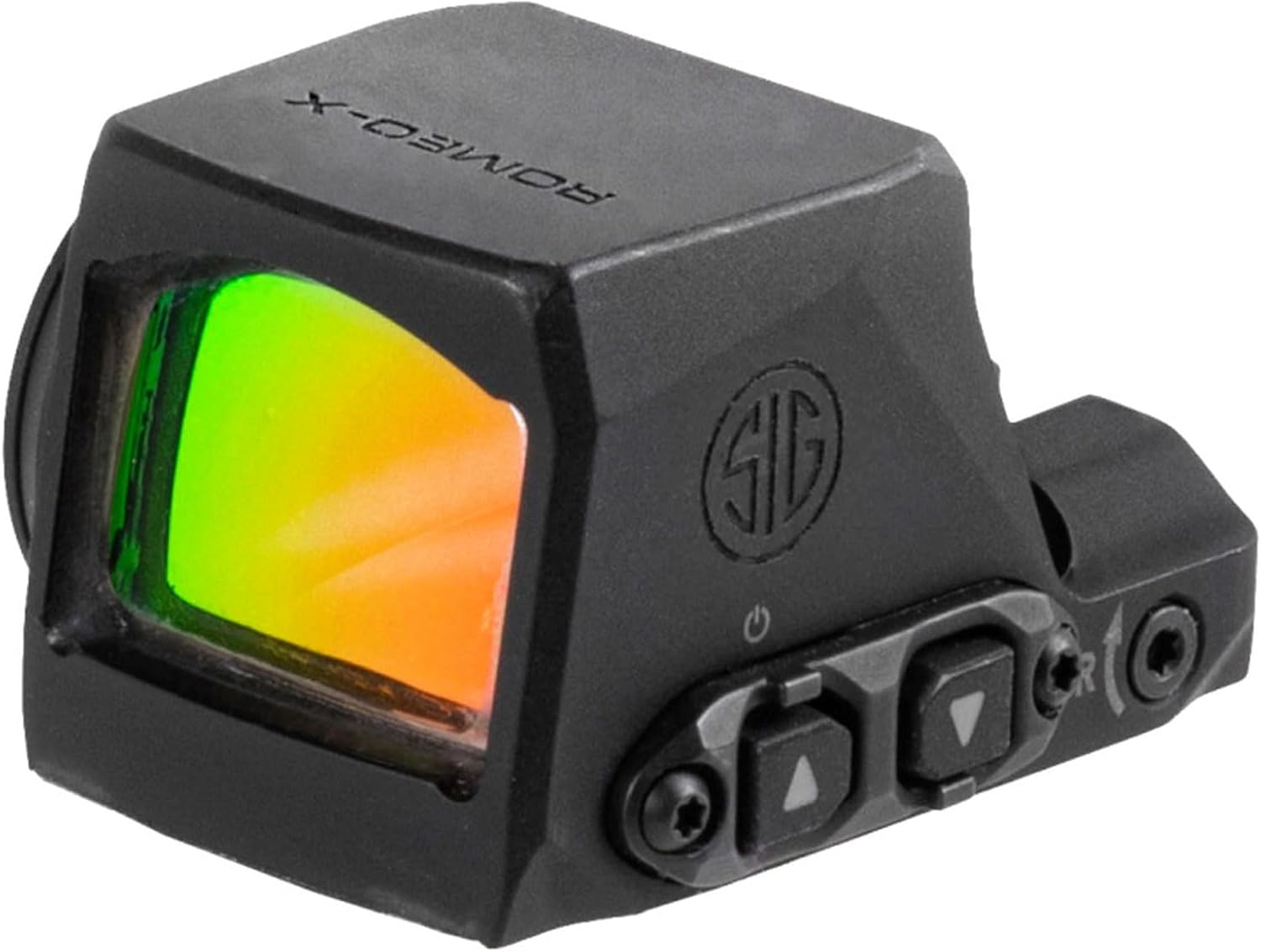
The ROMEO-X Compact feels purpose-built for the P365 series because SIG optimized the optic around factory mounting geometry, low deck height, and realistic concealed carry use. It is one of the cleanest factory-integrated optic systems currently available for slim SIG pistols.
Specs
- Open emitter
- RMSc footprint
- CNC aluminum housing
- Side battery compartment
- Multiple reticle options
- MOTAC activation
- Low-profile housing
Pros
- Excellent factory integration
- Very low deck height
- Strong recoil durability
- Crisp reticle
- Minimal slide overhang
Cons
- Expensive compared to competitors
- Open emitter design
- Smaller window than competition optics
The strongest aspect of the ROMEO-X Compact is how naturally it integrates with the P365 slide profile. The optic sits exceptionally low, which creates one of the best co-witness setups available without suppressor-height sights. Presentation feels natural because the optic window aligns closely with standard iron sight indexing.
I noticed excellent recoil tracking during rapid strings. The housing shape also minimizes snagging during concealed draw strokes. The battery compartment design is solid and less prone to loosening compared to older SIG optics.
Glass clarity is impressive with less tint than many Holosun optics. Edge distortion is minimal, and the emitter appears crisp even at higher brightness levels. I also experienced very little emitter occlusion during awkward shooting positions.
Button ergonomics are excellent. The controls have sharp tactile feedback and remain easy to manipulate while wearing gloves or under stress. Brightness range is broad enough for both indoor carry and bright midday outdoor shooting.
Community feedback has improved significantly compared to earlier SIG pistol optics generations. Many users report the ROMEO-X Compact finally delivers durability and reliability comparable to premium aftermarket competitors while maintaining superior integration with SIG pistols.
Mounting compatibility is outstanding because the optic is specifically engineered for the P365 ecosystem. Most modern optics-ready P365 slides allow direct mounting without adapter plates, preserving low deck height and better recoil alignment.
╰┈➤ Explore User Feedback and Current Pricing on Amazon
Trijicon RMRcc
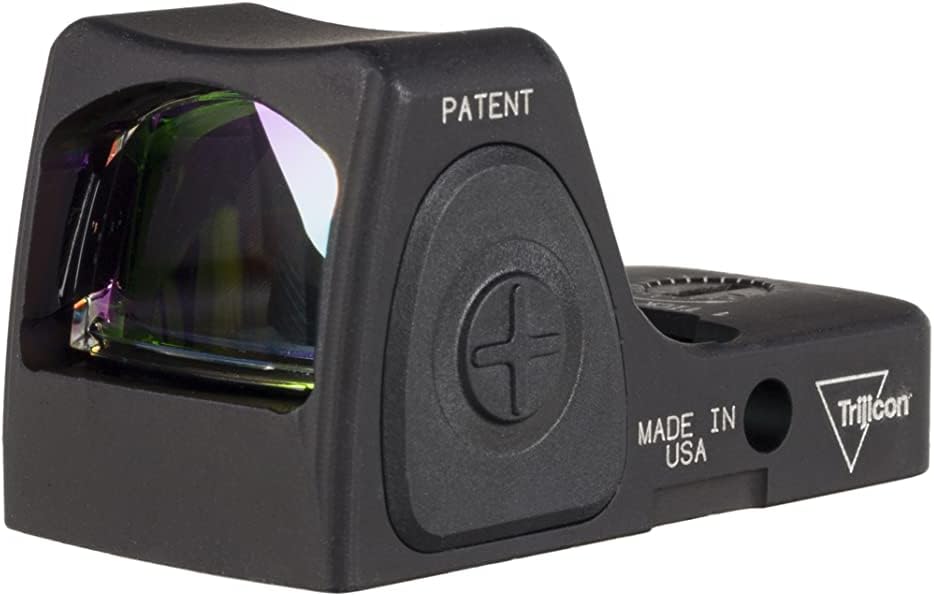
The RMRcc brings Trijicon’s durability reputation into the slim carry optic category. It is not the most feature-rich optic in this comparison, but it remains one of the toughest micro red dots available for hard-use concealed carry applications.
Specs
- Open emitter
- Proprietary RMRcc footprint
- Forged aluminum housing
- Top-loading battery
- 3.25 MOA dot options
- Waterproof construction
- Adjustable brightness
Pros
- Exceptional durability
- Excellent sealing
- Crisp dot quality
- Strong recoil resistance
- Reliable electronics
Cons
- Proprietary footprint
- Requires mounting plate on many P365s
- Smaller viewing window
The RMRcc feels extremely rugged on the P365 platform. The forged housing handles recoil abuse exceptionally well, and the optic maintains zero even after aggressive slide cycling and repeated impacts. This is one of the few micro optics I would confidently trust for professional-duty concealed carry.
The smaller window does require more discipline during presentation. However, once acclimated, I found tracking consistent and precise. The optic exhibits minimal distortion and excellent glass clarity with less tint than many competitors.
Parallax performance is strong, especially during unconventional shooting positions. The emitter remains crisp without excessive starbursting, which helps during fast transitions between multiple targets.
Brightness controls are positive and deliberate, though slightly recessed. I could still manipulate them with gloves, but they are not as fast as larger side-button designs. The top-loading battery is convenient and prevents zero loss during battery changes.
Online discussions consistently highlight the optic’s reliability and structural strength. Many users consider it the toughest carry-sized optic currently available despite the smaller window dimensions.
The biggest downside is mounting compatibility. The RMRcc uses its own footprint, so many P365 slides require adapter plates. That slightly increases deck height and can affect lower-third co-witness setups.
╰┈➤ Explore User Feedback and Current Pricing on Amazon
Shield Sights RMSc
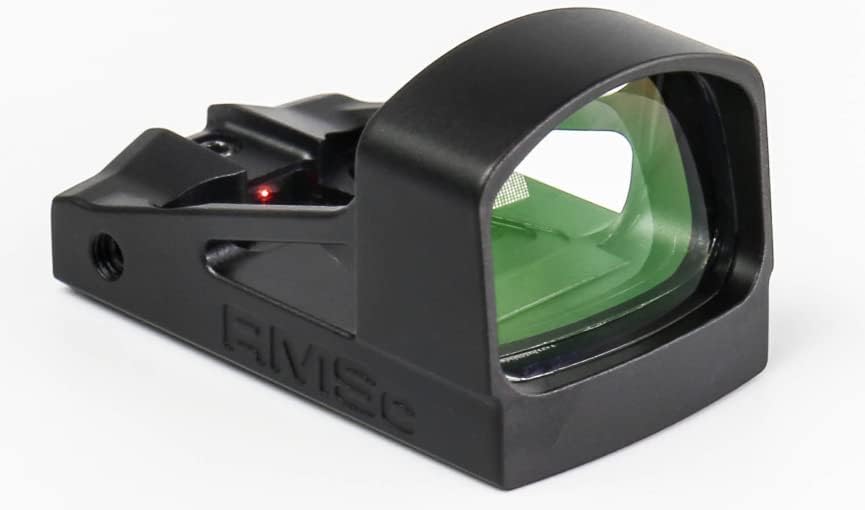
The RMSc deserves credit because it effectively established the modern micro-compact optic footprint now used across the P365 ecosystem. Even in 2026, it remains one of the lightest and lowest-profile carry optics available.
Specs
- Open emitter
- RMSc footprint
- Polymer lens
- Ultra-lightweight housing
- Automatic brightness adjustment
- Compact dimensions
- Slim carry profile
Pros
- Extremely low profile
- Lightweight design
- Direct P365 compatibility
- Fast presentation
- Minimal printing
Cons
- Polymer lens scratches easier
- Automatic brightness limitations
- Less durable than premium competitors
The RMSc excels when concealment is the highest priority. The optic practically disappears into the slide profile, preserving the slim handling characteristics that make the P365 such an effective carry pistol. Draw strokes feel extremely natural because the optic adds very little bulk.
Deck height is one of the lowest available, allowing excellent co-witness with factory-height irons on many P365 variants. That low mounting position also helps reduce perceived recoil movement during rapid fire.
The tradeoff is durability. While the optic handles standard carry use adequately, it does not feel as structurally robust as enclosed or forged-aluminum competitors. The polymer lens is also more susceptible to scratches and cleaning wear over time.
Glass clarity is decent with relatively low tint, though edge distortion becomes more noticeable during rapid target transitions. Parallax remains manageable at defensive distances but is not class-leading.
Online discussions remain mixed but generally positive among concealed carriers prioritizing minimal size and weight. Users consistently appreciate the direct mounting simplicity and ultra-low profile.
Mounting compatibility is excellent because the optic effectively defines the original RMSc footprint used on many P365 optics-ready slides. Direct mounting is typically simple and preserves the pistol’s compact geometry.
╰┈➤ Explore User Feedback and Current Pricing on Amazon
Vortex Defender CCW
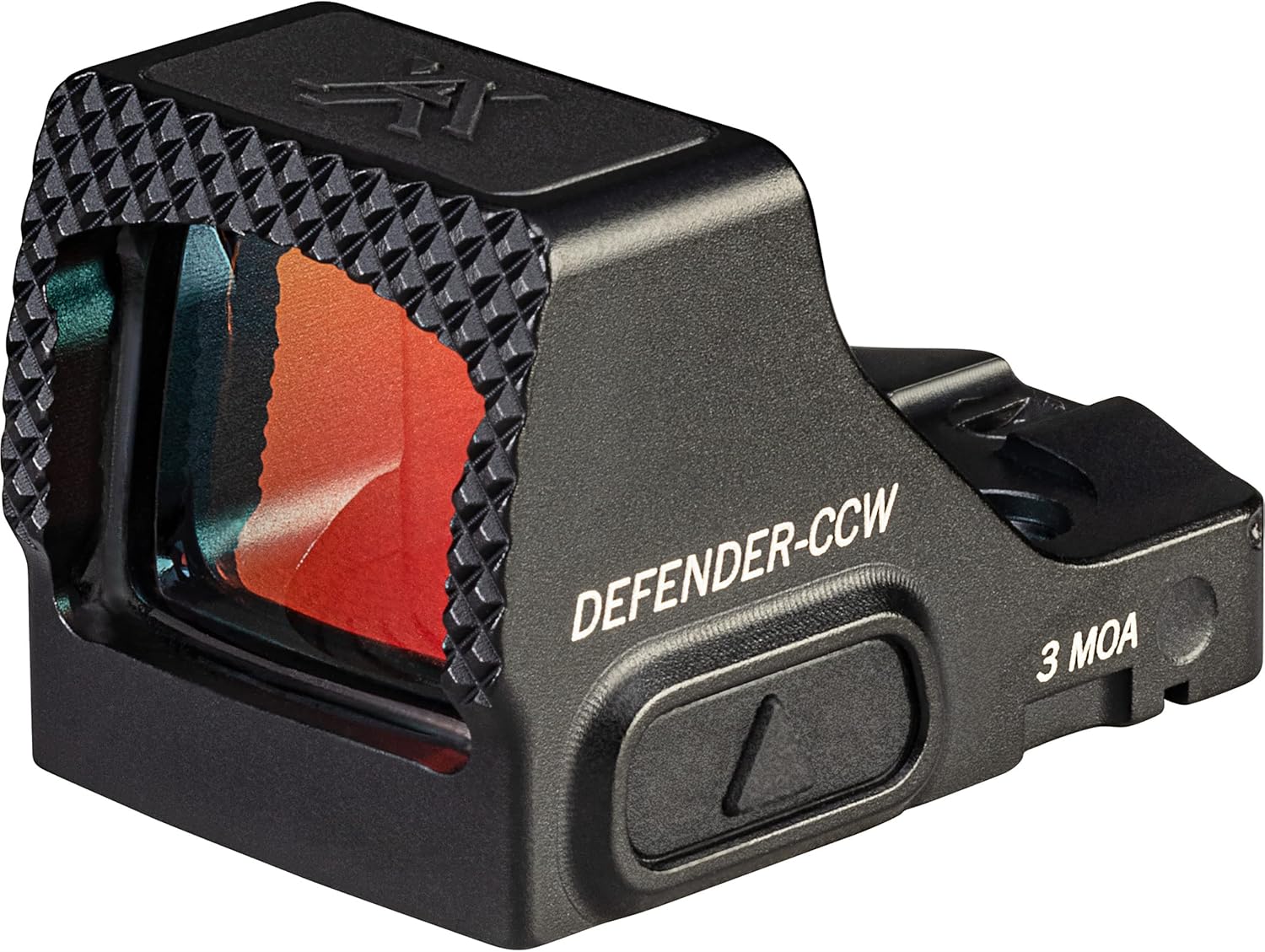
The Defender CCW surprised me because Vortex finally produced a carry optic that genuinely competes with established concealed carry favorites. It combines a robust housing, practical controls, and excellent value while maintaining dimensions suitable for the P365 platform.
Specs
- Open emitter
- RMSc footprint
- Fast-rack textured front
- Side battery access
- Multiple MOA options
- Waterproof construction
- Shock-resistant housing
Pros
- Strong value
- Excellent tactile controls
- Durable construction
- Large viewing window
- Good warranty support
Cons
- Slightly bulkier housing
- More noticeable lens tint
- Battery life trails Holosun
The Defender CCW feels sturdier than earlier Vortex pistol optics. The housing tolerates aggressive slide impacts well, and the front serrations allow reliable one-handed manipulations against hard surfaces.
The viewing window is slightly larger than several competing micro optics, which noticeably improves target acquisition speed during rapid presentations. I also found the optic forgiving during imperfect draw angles because the window geometry provides better peripheral visibility.
Parallax performance is solid for a carry optic, though not exceptional. The lens tint is more pronounced than premium competitors, particularly in low-light indoor environments. Still, the dot remains bright and easy to track under recoil.
One thing I genuinely like is the button ergonomics. The controls are large, tactile, and easy to manipulate with gloves. Battery access is straightforward, and the optic maintained zero reliably throughout repeated testing sessions.
Online feedback has been positive among budget-conscious concealed carriers looking for dependable performance without entering premium pricing territory. Users frequently mention the optic’s durability improvements compared to older Vortex handgun optics.
Mounting compatibility works well with the P365 ecosystem because the optic uses the RMSc footprint. Most optics-ready P365 slides support direct mounting without requiring aftermarket adapter systems.
╰┈➤ Explore User Feedback and Current Pricing on Amazon
How I Tested / Evaluation Criteria
Parallax Performance
Micro red dots inherently exhibit some degree of parallax shift, but better optics minimize visible point-of-impact deviation during off-center viewing. I evaluated each optic from awkward head positions, barricade angles, and compressed shooting stances to determine how forgiving the emitter remained during imperfect presentations.
Optics with cleaner emitters and better lens geometry maintained more stable dot positioning during rapid transitions. Excessive distortion or emitter flare immediately reduced usable speed on the P365 platform.
Co-Witness and Deck Height
The P365 rewards low-mounted optics because excessive deck height slows presentation and compromises concealment. I specifically evaluated how naturally each optic aligned with factory-height irons and whether suppressor-height sights became necessary.
Lower deck height also reduces perceived reciprocating mass during recoil. Optics sitting closer to the bore axis consistently tracked faster during controlled pairs and recoil recovery drills.
Durability
Micro-compacts generate surprisingly violent slide velocity, which exposes weak optics quickly. I focused heavily on zero retention, housing integrity, and battery compartment reliability after repeated live-fire sessions.
Closed emitters generally handled debris and environmental exposure better during concealed carry simulation. Structural rigidity around the lens housing also proved critical for long-term durability.
Battery Performance
Battery access matters significantly on carry optics because removing optics risks zero shift. Side-loading or top-loading battery systems received higher marks due to convenience and reliability.
I also evaluated auto-brightness systems, shake-awake features, and standby drain consistency. Several optics still suffer from inconsistent sleep-mode performance during extended carry use.
Brightness Range
Carry optics must handle both dark indoor conditions and harsh midday sunlight. I tested visibility during outdoor noon lighting, indoor white-wall environments, and low-light transitions.
Some emitters bloomed excessively at higher brightness settings, particularly on smaller windows. Better optics maintained clean dot definition across the brightness range.
Glass Quality
Lens tint, edge distortion, and clarity all directly affect target acquisition speed. I evaluated each optic during movement drills and extended visual tracking sessions to identify distortion zones and reflective glare.
Better coatings reduced internal reflections while maintaining natural color representation. Excessive blue or green tint became distracting during rapid target transitions.
Controls and Ergonomics
Button placement and tactile response become critical under stress or while wearing gloves. I tested every optic with cold-weather gloves and during timed drills to assess usability.
Weak or recessed controls slowed adjustments significantly. The best optics balanced secure carry protection with accessible brightness management.
Mounting Ecosystem
The P365 ecosystem contains multiple slide configurations and footprint variations, making mounting compatibility extremely important. I prioritized optics that minimize adapter plate usage and preserve low deck height.
Direct mounting generally provides better recoil alignment and reduced tolerance stacking. Proprietary footprints often complicate installation and increase total system height.
How to Choose the Right Red Dot for This Gun
Choosing a P365 optic requires balancing concealment, durability, window size, and mounting simplicity. Unlike full-size pistols, micro-compacts amplify every design compromise because the platform itself is so compact and recoil-sensitive.
The first thing I consider is footprint compatibility. Many modern P365 slides support RMSc-pattern optics directly, which is ideal because it preserves low deck height and better co-witness alignment. Optics requiring adapter plates often sit higher and slightly alter recoil tracking characteristics.
Window size matters, but bigger is not always better on the P365. Oversized optics increase slide width and printing during concealed carry. I generally prefer optics that stay close to slide dimensions while still offering enough visibility for rapid acquisition.
Enclosed emitters are increasingly attractive for daily carry because pocket lint, sweat, and moisture accumulate quickly on concealed pistols. If the gun spends long hours inside a waistband holster, enclosed optics dramatically reduce maintenance concerns.
Battery access is another major factor. Bottom-loading battery systems are less appealing on carry guns because removing the optic risks zero changes. Side-loading or top-loading batteries simplify maintenance and encourage more consistent replacement schedules.
I also strongly recommend prioritizing deck height. The P365 handles best when optics sit low enough to maintain natural indexing during presentation. Tall optics often force shooters to “hunt” for the dot under stress.
Durability should match intended use. Casual range shooters may not need a duty-grade forged housing, but defensive carry optics should survive repeated slide impacts, drops, and environmental exposure without losing zero.
Finally, consider how the optic complements the specific P365 variant. The standard P365 benefits from ultra-compact optics, while the XL and XMacro can comfortably support slightly larger windows and enclosed systems.
FAQs
What footprint does the P365 use?
Most optics-ready P365 models use the RMSc footprint or a modified RMSc/K footprint. Always confirm your exact slide generation before purchasing an optic.
Can you co-witness factory sights with a P365 red dot?
Yes, many low-profile optics allow partial or full co-witness with factory-height sights. Lower deck height optics generally perform best.
Is an enclosed emitter worth it on a carry gun?
For daily concealed carry, I think enclosed emitters are increasingly worthwhile because they resist sweat, lint, moisture, and debris contamination much better than open emitters.
Does adding a red dot affect concealment?
Slightly, but compact optics designed for the P365 minimize printing. Width matters more than height for most concealed carry setups.
Which optic is best for the P365 XMacro?
The EPS Carry and ROMEO-X Compact both pair exceptionally well with the XMacro because they balance larger windows with low-profile mounting geometry.
Conclusion
The Best Red Dot for P365 ultimately depends on whether you prioritize maximum concealment, enclosed-emitter protection, rugged durability, or overall value. After extensive testing, I believe the HOLOSUN EPS Carry currently offers the best overall balance for most concealed carriers because it combines compact dimensions, outstanding reliability, and excellent mounting compatibility without sacrificing practical performance.
Sources referenced include manufacturer specifications from Holosun, SIG Sauer, Trijicon, Shield Sights, and Vortex, along with user-reported durability feedback from Reddit carry communities, pistol-forum discussions, and optics mounting references.