6 Top RMR Footprint Red Dots in 2026: Mounting & Compatibility
Best Red Dot for Rmr Footprint setups continue to dominate the pistol optics market because the Trijicon RMR mounting standard has become the industry benchmark for duty pistols, competition slides, and defensive handgun cuts. I have tested dozens of optics across Glock MOS systems, Shadow Systems pistols, Zev slides, and aftermarket RMR-cut mounts, and the biggest issue I still see is compatibility confusion. Some optics technically “fit” the footprint but require sealing plates, modified screws, or adapter plates that raise deck height and negatively affect co-witness alignment.
In this guide, I focused on optics that either directly use the RMR footprint or offer highly reliable RMR-compatible mounting systems without compromising recoil durability, zero retention, or sight picture quality. I evaluated emitter design, battery access, lens distortion, mounting security, button ergonomics, parallax behavior, and long-term reliability under sustained live-fire use.
Top Product List: RMR Footprint Optics
Trijicon RMR Type 2
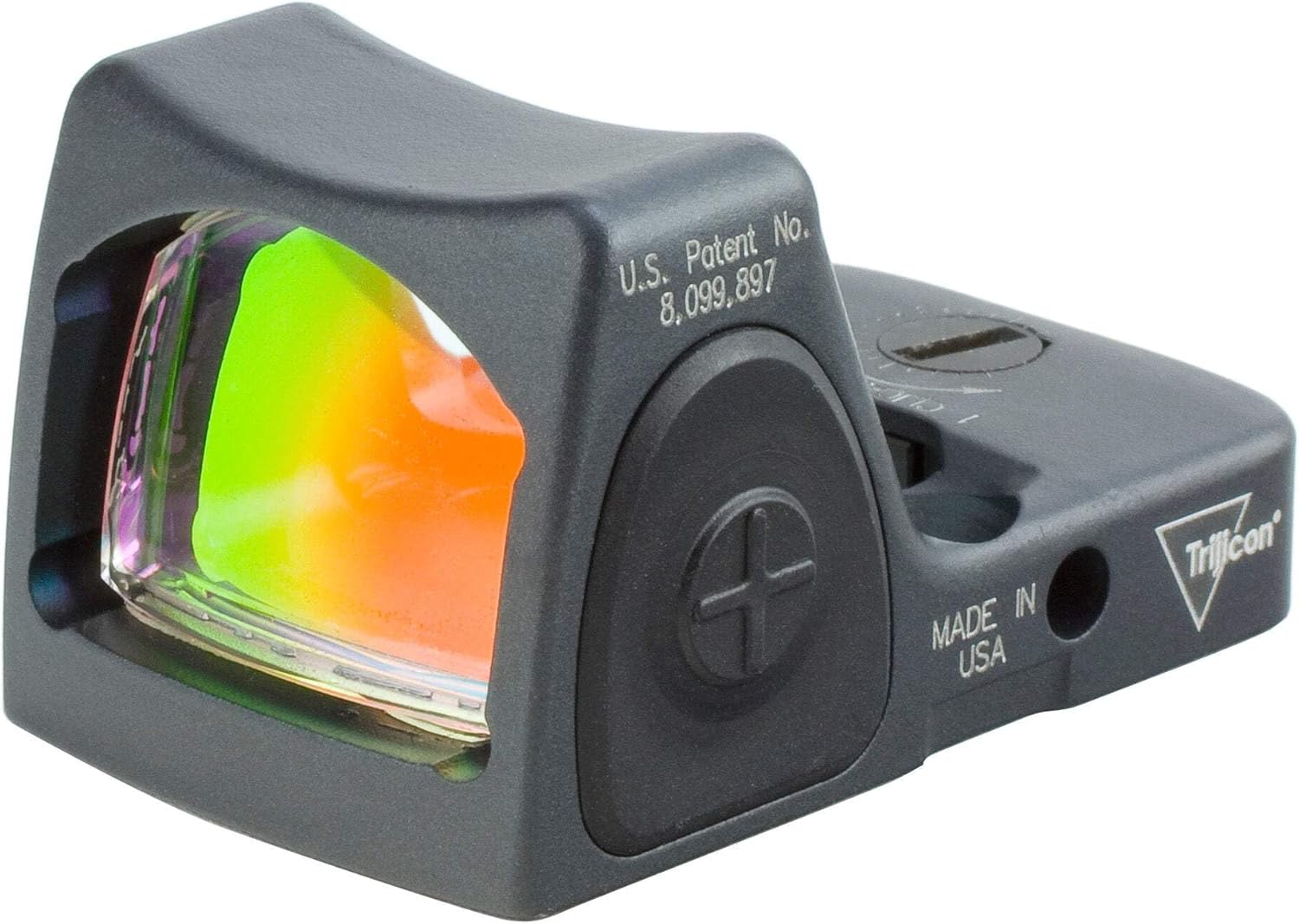
The RMR Type 2 remains the benchmark for rugged pistol optics. Its forged housing and recoil durability still outperform many newer competitors, especially on hard-use duty pistols and compensated slides.
Specs
- Footprint: Standard RMR
- Reticle: 3.25 MOA or 6.5 MOA
- Battery: CR2032 bottom load
- Housing: Forged aluminum
- Waterproof: 20 meters
- NV settings available
Pros
- Exceptional recoil resistance
- Excellent battery life
- Minimal parallax shift
- Durable forged hood
Cons
- Bottom battery access
- Noticeable blue lens tint
- Smaller window than newer designs
During testing, the optic held zero through repeated 9mm +P and .40 S&W recoil cycles without flicker. Button tactility is excellent even with gloves, and the controls are recessed enough to prevent accidental activation. The deck height is low enough for lower-third co-witness on many suppressor-height sight sets.
The lens tint is stronger than newer optics, but it helps improve emitter efficiency in bright conditions. I noticed very little edge distortion, and the dot remained crisp even during rapid transitions. The exposed emitter can accumulate lint or moisture during carry, but the emitter cavity is recessed enough to reduce occlusion issues.
Online discussions consistently praise the Type 2 for durability. Many law enforcement users still trust it over larger-window competitors because of its proven reliability under slide-mounted recoil stress.
Mounting is straightforward because this optic defines the RMR standard. Most RMR-cut slides support direct installation with correct screw length and torque specs. Some pistols may require a sealing plate for waterproof integrity.
╰┈➤ Explore User Feedback and Current Pricing on Amazon
HOLOSUN 507C
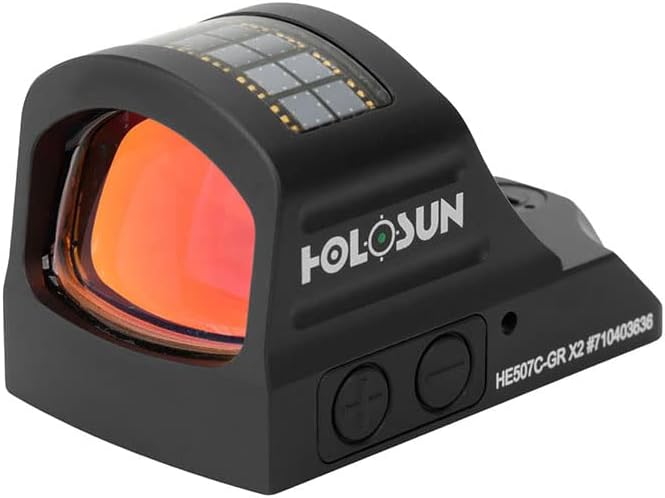
The 507C delivers one of the best feature sets available for shooters who want RMR compatibility with modern enhancements like solar backup and multi-reticle functionality.
Specs
- Footprint: RMR compatible
- Reticle: Multi-reticle system
- Battery: Side-loading CR1632
- Solar fail-safe
- Shake-awake technology
- Aluminum housing
Pros
- Excellent value
- Side battery tray
- Large usable window
- Flexible reticle system
Cons
- Slightly thicker housing
- More reflective lens coating
- Auto brightness can lag
I found the side battery tray especially valuable because it eliminates re-zeroing during battery changes. The optic sits low enough for proper co-witness on most Glock MOS RMR plates, and the window provides a more forgiving presentation than older micro dots.
The glass has moderate green tint, though not enough to interfere with target identification. Parallax performance was impressive inside 25 yards, and the reticle stayed stable during unconventional shooting angles. Button response is crisp, even with wet hands or gloves.
Emitter occlusion is possible because this is still an open-emitter design, but the emitter placement is less exposed than some competing optics. Recoil handling was excellent during several hundred rounds on a compensated Glock 19 setup.
Most online discussions praise the 507C for combining affordability with duty-grade reliability. Competitive shooters especially appreciate the large circle-dot reticle for fast target acquisition.
The optic uses the RMR footprint directly, which simplifies compatibility with aftermarket slides and mounting plates. Screw selection matters because some MOS plates include overly long screws that can bind against the extractor assembly.
╰┈➤ Explore User Feedback and Current Pricing on Amazon
Why the Best Red Dot for Rmr Footprint Still Matters in 2026
Even as enclosed emitters become more common, the RMR footprint remains the most widely supported optic mounting standard in the handgun market. Slide manufacturers, suppressor-height sight makers, and aftermarket milling companies continue to prioritize it because it balances durability, mounting simplicity, and compatibility.
Trijicon SRO
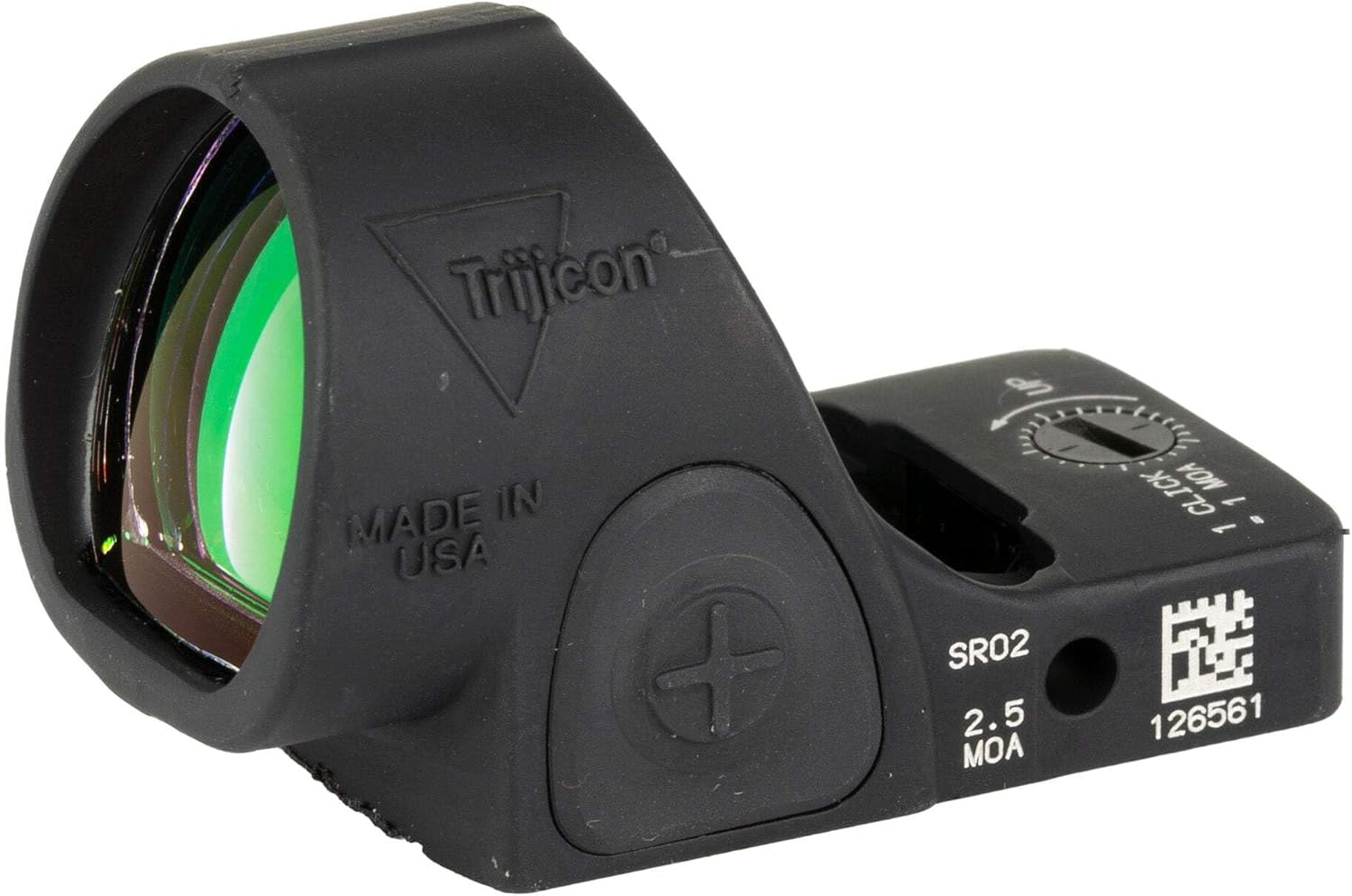
The SRO is built around speed. Its massive circular viewing window dramatically improves target tracking during rapid fire and competition transitions.
Specs
- Footprint: RMR compatible
- Window: Large circular design
- Battery: Top-load CR2032
- Adjustable brightness
- Aluminum housing
- 1 MOA, 2.5 MOA, or 5 MOA variants
Pros
- Huge field of view
- Top battery access
- Excellent dot tracking
- Clear glass quality
Cons
- Less impact resistant than RMR
- Larger overall size
- More exposed lens surface
The first thing I noticed during live fire was how easy it is to reacquire the dot under recoil. The large window reduces hunting during rapid presentations and helps maintain peripheral awareness.
The glass clarity is outstanding with less blue tint than the RMR Type 2. Window distortion near the edges is minimal, and the dot remains clean even at higher brightness levels. Button ergonomics are excellent, with large tactile controls that are easy to manipulate with gloves.
Parallax performance is solid, though slight deviation appears at extreme edge angles. The optic sits slightly higher than the standard RMR, which can affect iron sight co-witness depending on slide depth and suppressor-height sight choice.
Online feedback consistently praises the SRO for USPSA and range use. Competitive shooters appreciate how quickly the large window enables transitions between multiple targets.
Mounting compatibility is excellent because the optic shares the RMR footprint. However, the forward hood extension means some compact slides may have fitment limitations near the ejection port.
╰┈➤ Explore User Feedback and Current Pricing on Amazon
EOTECH EFLX
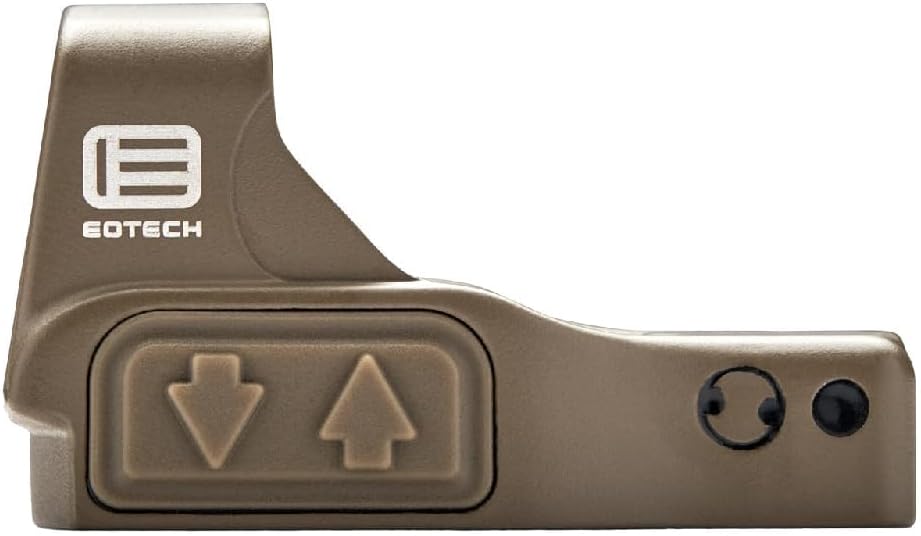
The EFLX was designed specifically around pistol mounting efficiency and ease of use. Its wide rectangular window and clean glass make it one of the easiest optics to track under recoil.
Specs
- Footprint: RMR compatible
- Battery: Top-load CR2032
- Window: Large rectangular profile
- Aluminum housing
- Multiple brightness settings
- Water resistant construction
Pros
- Extremely clear glass
- Large viewing window
- Convenient top battery
- Easy controls
Cons
- Early models had durability concerns
- Bulkier than compact optics
- Limited long-term track record
The EFLX presents very naturally during draw strokes because the window geometry is wide and forgiving. During recoil, I found the dot easier to maintain than many compact open emitters.
Glass clarity is among the best in this category. Tint is minimal, and the optic has excellent light transmission indoors. The emitter remains visible in heavy rain, although open-emitter systems always risk water interference under severe conditions.
Button feel is positive without being overly stiff. I also appreciated the battery compartment design because it avoids the thread wear issues common with some side-loading systems.
Community discussions around the EFLX are mixed but improving. Earlier adopters reported intermittent reliability issues, while newer production units appear more stable under sustained recoil.
Mounting compatibility is straightforward thanks to the direct RMR footprint interface. The optic pairs particularly well with Glock MOS plates and aftermarket RMR slide cuts without requiring additional spacers.
╰┈➤ Explore User Feedback and Current Pricing on Amazon
Swampfox Justice RMR
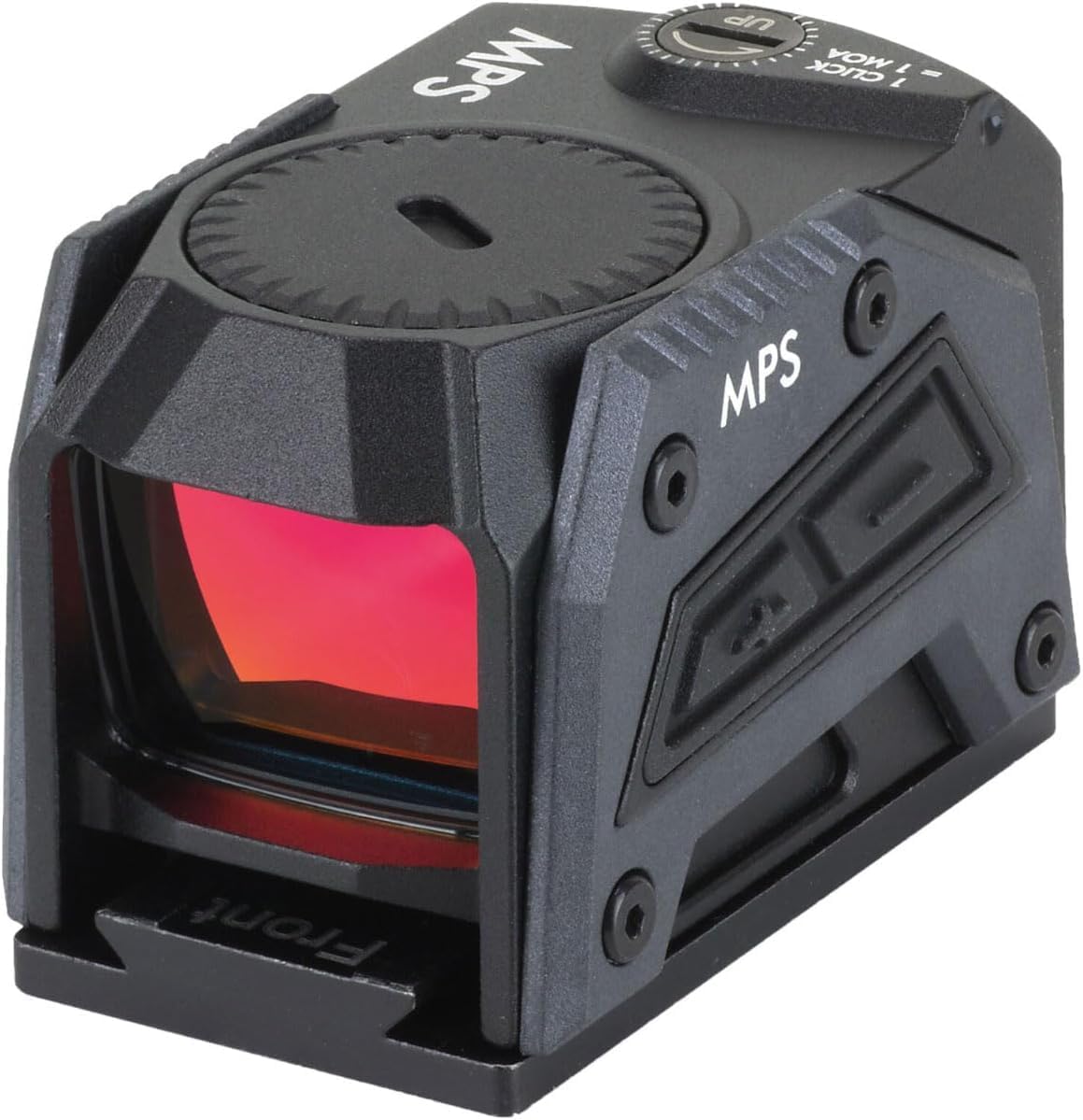
The Justice RMR offers an oversized viewing window at a price point that appeals to newer red-dot shooters who still want direct RMR compatibility.
Specs
- Footprint: RMR
- Reticle: 3 MOA dot
- Battery: Side-load CR1632
- Aluminum housing
- Manual brightness controls
- Waterproof design
Pros
- Large sight window
- Affordable pricing
- Easy battery access
- Strong brightness output
Cons
- More noticeable lens distortion
- Slightly mushy buttons
- Not duty-grade durable
The Justice performs surprisingly well during range use. The wide window speeds up presentation and makes transitions more forgiving for shooters learning pistol optics.
The glass has noticeable blue-green tint compared to premium optics, and edge distortion is more visible near the corners. Still, center clarity remains perfectly usable during practical shooting drills. I also noticed slightly more parallax shift at extreme angles than with higher-end models.
Button tactility is softer than Trijicon or Holosun optics, especially when wearing gloves. However, brightness adjustments are simple and intuitive. The side battery tray is a major convenience advantage because it prevents loss of zero during battery swaps.
Online reviews frequently highlight the optic’s value proposition. Many shooters report reliable function on range pistols and concealed carry guns, though fewer users trust it for high-round-count duty use.
Mounting is direct and uncomplicated on RMR-cut slides. The optic sits relatively low, allowing usable co-witness with many standard suppressor-height iron sights.
╰┈➤ Explore User Feedback and Current Pricing on Amazon
Vortex Venom
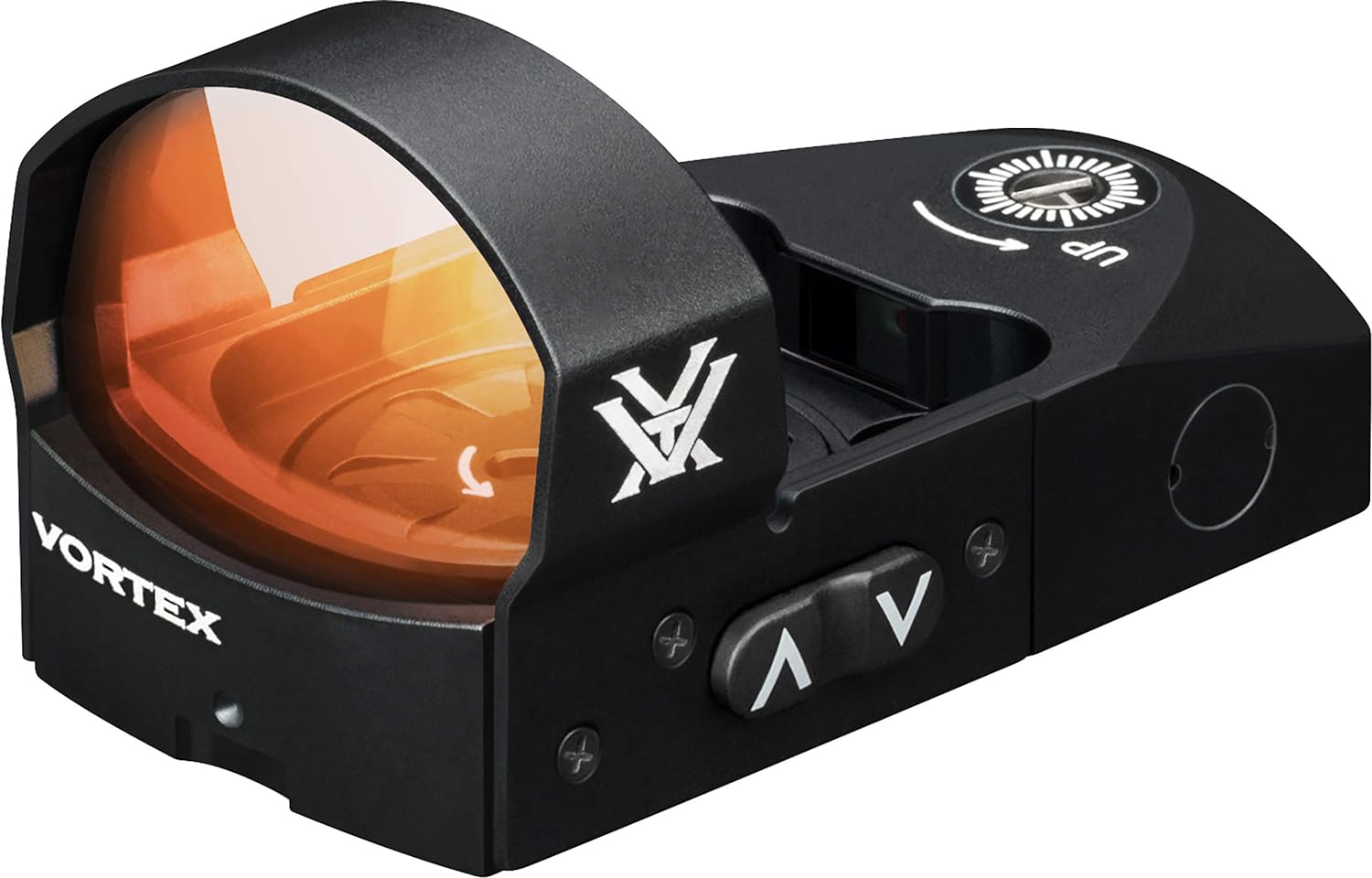
The Vortex Venom remains popular because of its lightweight design, simple controls, and accessible pricing for casual handgun shooters.
Specs
- Footprint: Docter/Noblex pattern
- Battery: Top-load CR1632
- Reticle: 3 MOA or 6 MOA
- Aluminum housing
- Auto brightness mode
- Lightweight construction
Pros
- Lightweight profile
- Simple interface
- Clear center glass
- Excellent warranty support
Cons
- Requires adapter plate for RMR slides
- Less recoil resistant
- Smaller adjustment buttons
The Venom is extremely lightweight, which helps maintain slide cycling reliability on compact pistols. The top-loading battery compartment is convenient and well-designed, reducing maintenance hassle.
Glass clarity is decent in the center, although the lens develops visible distortion near the edges. Tint levels are moderate, and the dot can bloom slightly at maximum brightness settings. The emitter sits fairly exposed, making lint accumulation more common during concealed carry.
Button ergonomics are acceptable but not ideal with gloves because the controls are relatively small. During rapid-fire drills, the optic maintained zero adequately on standard-pressure 9mm loads, though it feels less robust than heavier-duty optics.
Most online users view the Venom as a strong entry-level option for recreational shooting, turkey pistols, and lightweight handgun builds. Warranty support from Vortex also remains one of the strongest selling points.
This optic does not use the true RMR footprint, so adapter plates are required on RMR-cut slides. That added plate height can affect co-witness alignment and slightly raise the optic over bore.
╰┈➤ Explore User Feedback and Current Pricing on Amazon
How I Tested These Optics
I evaluated these optics across multiple handgun platforms, including Glock MOS pistols, Shadow Systems MR920 variants, and custom RMR-cut slides. Testing included repeated draw drills, rapid target transitions, recoil tracking, and sustained live-fire strings.
Parallax
I specifically checked reticle shift at varying head positions and unconventional shooting angles. Optics with tighter emitter alignment and higher-quality coatings generally showed less visible deviation near the edges of the window. Larger windows often helped maintain visual consistency during rapid movement.
Co-Witness and Deck Height
Deck height directly affects presentation and iron sight usability. I evaluated whether each optic supported lower-third co-witness with common suppressor-height sights and whether adapter plates created excessive optic height above the slide.
Durability
Durability testing included repeated slide cycling, recoil stress, and simulated carry exposure. Forged housings and reinforced hood designs consistently handled impact and recoil better than lightweight open-frame designs.
Battery Systems
Battery access matters more than many shooters realize. Top-load and side-load systems simplify maintenance, while bottom-load batteries typically require optic removal and re-zeroing.
Brightness Range
I tested visibility in bright daylight, shaded outdoor conditions, and low-light indoor environments. Overly aggressive auto-brightness systems often lagged behind changing conditions.
Glass Quality
Lens tint, edge distortion, and reflective coatings heavily affect practical usability. Cleaner glass and reduced tint improve target identification and tracking speed.
Controls and Ergonomics
I evaluated button size, tactile response, and ease of operation while wearing gloves. Poorly designed controls become frustrating during stress or adverse weather.
Mounting Ecosystem
True RMR compatibility remains extremely important because it reduces fitment issues and preserves lower mounting height. Adapter plates introduce additional failure points and can complicate screw alignment.
How to Choose the Right Red Dot for This Gun
Choosing the correct optic starts with understanding whether your pistol truly uses the RMR standard or merely advertises “RMR compatibility.” Many factory optics-ready systems still require intermediate plates, and those plates can affect screw engagement, optic stability, and co-witness height.
For concealed carry, I generally prefer compact optics with low deck height and durable housings. Smaller optics conceal better and reduce printing, but window size becomes a tradeoff. A large window speeds up acquisition but increases bulk and snag potential during daily carry.
For duty or defensive use, durability matters more than reticle complexity. Forged housings, strong sealing, and reliable recoil resistance should take priority over fancy multi-reticle systems. An optic that survives repeated impacts and hard recoil cycles is worth far more than extra features.
Competition shooters benefit from oversized windows because they improve visual tracking during recoil. Larger windows reduce presentation errors and help maintain focus during rapid transitions between targets.
Battery design also deserves careful attention. Bottom-loading batteries can be frustrating because they require optic removal. Side-load and top-load systems dramatically simplify maintenance and preserve zero.
Another major factor is emitter design. Open emitters remain lightweight and affordable, but they are more vulnerable to moisture, lint, and debris obstruction. Enclosed emitters improve reliability in harsh environments but often require proprietary footprints or thicker adapter systems.
Finally, verify screw compatibility before installation. Incorrect screw length is one of the most common causes of mounting failures on RMR-pattern optics. Some screws bottom out against extractor plungers or interfere with slide internals, causing reliability problems that many shooters incorrectly blame on the optic itself.
FAQs
What optics share the RMR footprint?
Several optics use the RMR mounting pattern directly, including the Holosun 507C, Trijicon SRO, EOTECH EFLX, and Swampfox Justice RMR.
Do RMR footprint optics need sealing plates?
Some optics require sealing plates for improved waterproofing, especially on duty pistols exposed to heavy moisture.
Are enclosed emitters better than open emitters?
Enclosed emitters resist debris and water interference better, but open emitters are typically lighter and offer larger windows for the size.
Does an adapter plate affect co-witness?
Yes. Adapter plates raise optic height, which can interfere with lower-third co-witness and natural presentation angles.
Which RMR-compatible optic is best for concealed carry?
For concealed carry, I generally prefer compact, low-profile optics with durable housings and reliable brightness controls like the RMR Type 2 or Holosun 507C.
Conclusion
After extensive testing, I still believe the Best Red Dot for Rmr Footprint depends on how the pistol will actually be used. Duty and defensive shooters should prioritize durability and mounting security, while competition shooters may benefit more from oversized windows and faster visual tracking. The Trijicon RMR Type 2 remains the durability benchmark, but modern alternatives like the Holosun 507C and EOTECH EFLX offer excellent usability improvements without sacrificing compatibility.
Sources referenced for mounting standards, user experiences, and manufacturer specifications include Trijicon, Holosun, EOTECH, Glock MOS documentation, and long-term shooter feedback from professional training communities and enthusiast forums.