6 Best Red Dot for Ruger Max 9 in 2026: Mounting & Compatibility
Best Red Dot for Ruger Max 9 choices have improved dramatically over the last few years, especially now that compact carry optics are more durable, lower-profile, and easier to mount on micro-compact pistols. The Ruger Max-9 is already optics-ready from the factory, but choosing the right sight is not as simple as bolting on the first optic you find online. Footprint compatibility, deck height, co-witness capability, and window geometry all matter on a pistol this compact.
After testing multiple carry optics on the Max-9 platform, I found that the best performers balance concealability with durability while maintaining fast target acquisition under recoil. Some optics offer better emitter protection, others provide cleaner glass or improved battery access, and a few stand out specifically because they fit the Ruger slide without awkward adapter stacks.
In this guide, I break down six optics that genuinely pair well with the Ruger Max-9 in 2026, focusing heavily on mounting compatibility, recoil behavior, parallax performance, and everyday carry practicality.
Top Product List: Best Red Dot for Ruger Max 9
HOLOSUN EPS CARRY
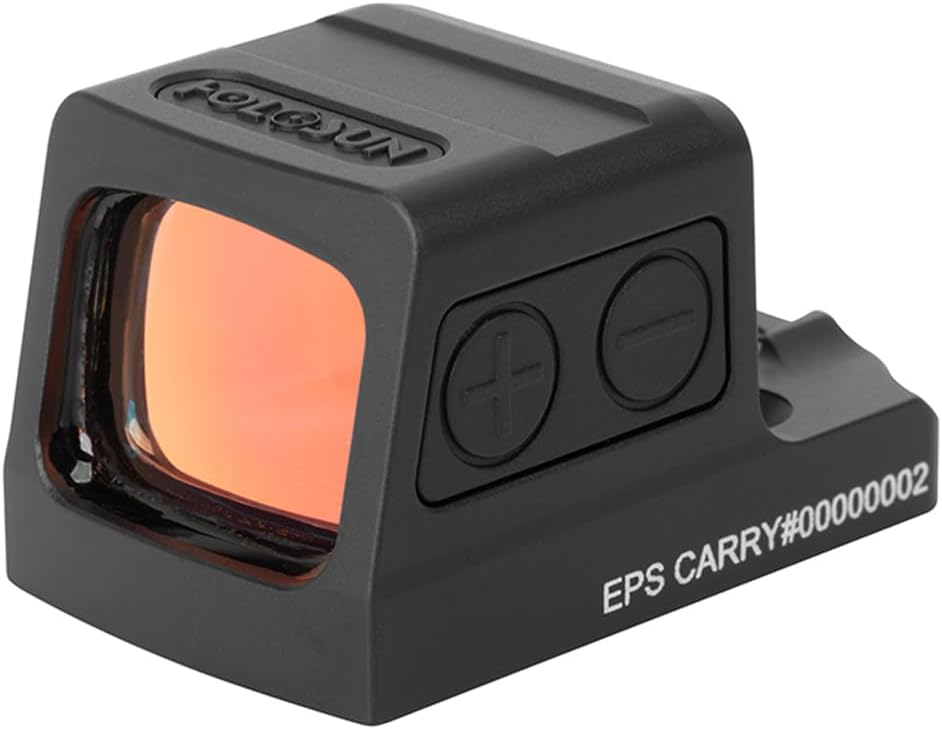
The EPS Carry is currently my favorite enclosed-emitter optic for the Ruger Max-9 because it combines compact dimensions with outstanding weather resistance and excellent concealment characteristics.
Specs
- Enclosed emitter
- 2 MOA dot or MRS variants
- RMSc/K footprint
- Side battery tray
- 7075 aluminum housing
- Multi-reticle system
- Shake Awake technology
Pros
- Fully enclosed emitter
- Excellent water resistance
- Crisp dot with minimal bloom
- Side-loading battery
- Very durable housing
Cons
- Slight blue lens tint
- Higher cost than open emitters
The EPS Carry sits low enough on the Max-9 to maintain an acceptable lower-third co-witness with factory-height irons depending on plate thickness. I noticed very little parallax shift inside realistic defensive distances. The glass clarity is excellent for a micro optic, and edge distortion is controlled better than most optics in this size category.
During recoil testing, the optic tracked predictably without the “floating window” sensation common on lighter polymer-bodied dots. The side battery tray is a huge advantage because I never had to remove the optic to replace the battery and re-confirm zero.
Online discussions consistently praise the EPS Carry for reliability during concealed carry. Many users on pistol forums specifically mention reduced lint intrusion thanks to the enclosed emitter design. That matters more than most people think on an everyday carry gun.
Mounting is straightforward because the Ruger Max-9 uses an RMSc-pattern interface. The EPS Carry technically uses the modified K footprint, but most Max-9 optic cuts accept it directly or with minimal fitting depending on slide revision.
╰┈➤ Explore User Feedback and Current Pricing on Amazon
HOLOSUN 507K
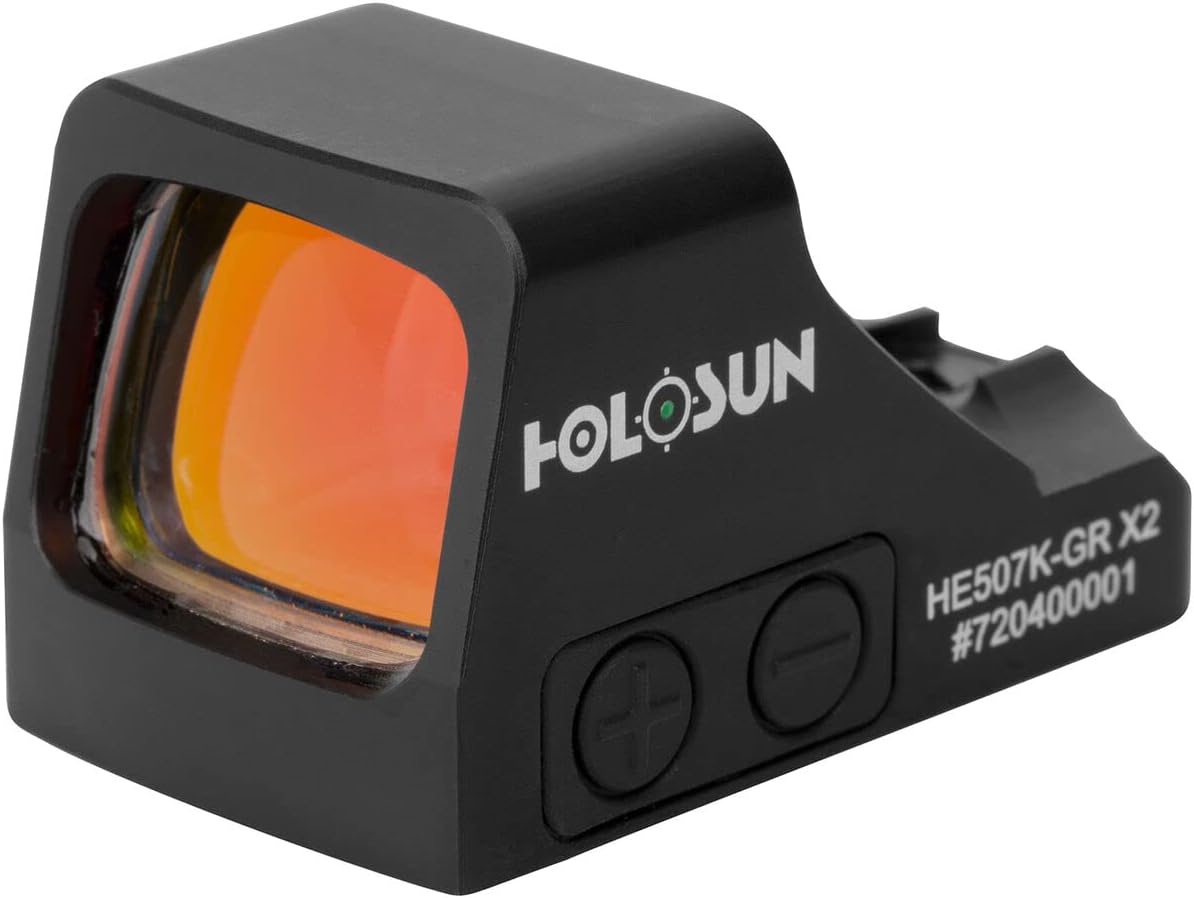
The 507K remains one of the most balanced carry optics ever made for slim pistols, and it pairs exceptionally well with the Max-9 because of its compact deck height and generous window size.
Specs
- Open emitter
- 2 MOA dot with 32 MOA circle
- 7075 aluminum body
- Side battery tray
- Shake Awake
- RMSc-modified footprint
Pros
- Outstanding reticle system
- Excellent battery life
- Compact footprint
- Strong housing
- Easy brightness controls
Cons
- Open emitter exposed to debris
- Slightly busy reticle for some shooters
The reticle flexibility is the biggest reason I still recommend the 507K. The circle-dot system accelerates close-range presentation on small pistols where sight alignment errors happen quickly under pressure. I also found the window easier to track during rapid recoil strings compared to several competing micro optics.
Button tactility is excellent even while wearing gloves. The controls have enough resistance to avoid accidental brightness changes during concealed carry. Lens tint exists but is mild enough that it never distracted me outdoors.
Under recoil, the optic remained stable with no noticeable flicker or emitter washout. I also appreciate how low the body sits on the slide. Co-witness alignment feels more natural than taller enclosed optics.
Online feedback continues to favor the 507K because it offers premium-level durability without premium-level pricing. Many concealed carriers mention years of reliable use across thousands of rounds.
Mounting compatibility is generally excellent on the Ruger Max-9. Some slide versions may require slight recoil lug modification or a compatible mounting plate because the K footprint differs subtly from true RMSc standards.
╰┈➤ Explore User Feedback and Current Pricing on Amazon
Shield Sights RMSc
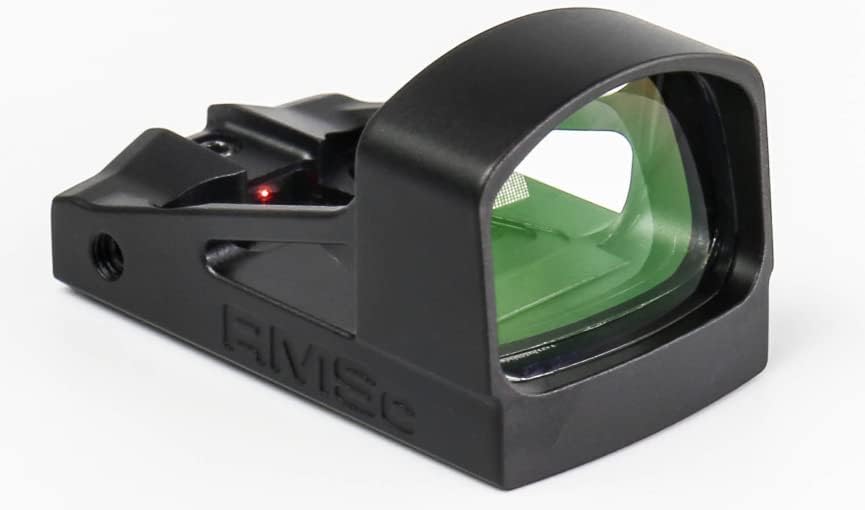
The RMSc deserves credit because it helped establish the modern micro-compact optic footprint now used across many concealed carry pistols, including the Ruger Max-9.
Specs
- Polymer lens
- Open emitter
- Ultra-lightweight design
- Direct RMSc footprint
- Automatic brightness adjustment
- Slim housing profile
Pros
- Extremely lightweight
- Very low deck height
- Direct fit on many slides
- Minimal printing during carry
- Fast presentation
Cons
- Polymer lens scratches easier
- Auto-brightness is imperfect
The biggest advantage of the RMSc is how naturally it integrates with slim carry pistols. The optic almost disappears into the slide profile, which improves concealment and reduces snagging during draws.
Because the optic sits so low, co-witness alignment is among the best I tested on the Max-9. Presentation feels intuitive, especially for shooters transitioning from iron sights. Parallax shift was minimal at defensive distances, although the smaller window requires more consistent presentation technique.
The polymer lens does reduce durability compared to modern aluminum-and-glass optics. I also noticed that aggressive sunlight angles occasionally confused the auto-brightness system. Still, the optic remains extremely fast during daylight shooting.
Online discussions remain mixed but generally positive. Long-term users appreciate the compactness and lightweight design, while critics usually focus on durability limitations compared to newer enclosed optics.
Mounting is simple because the Ruger Max-9 was designed around the RMSc ecosystem. The optic usually installs directly without requiring aftermarket adapter plates or extensive fitting.
╰┈➤ Explore User Feedback and Current Pricing on Amazon
Sig Sauer RomeoZero
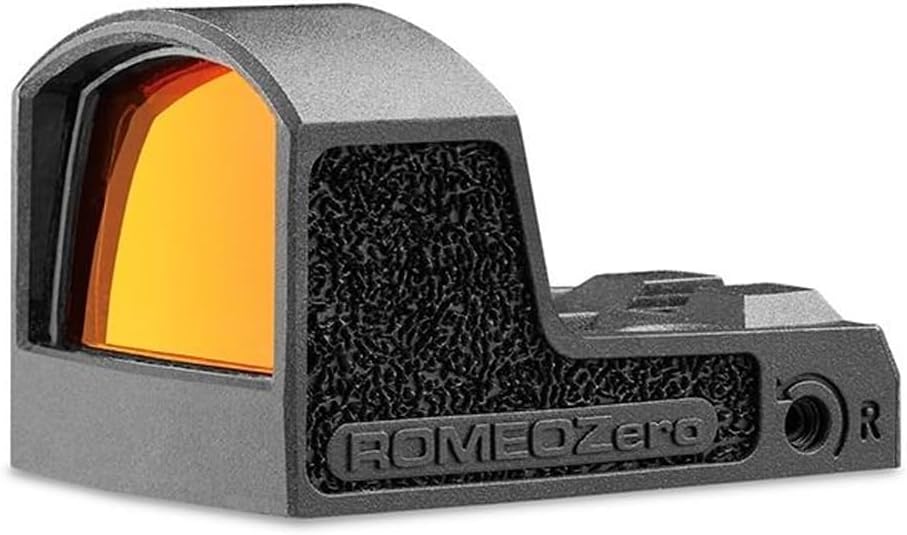
The RomeoZero is one of the lightest optics available for micro-compacts, and while it is not the toughest optic here, it works surprisingly well for lightweight concealed carry setups.
Specs
- Polymer housing
- 3 MOA or 6 MOA dot
- MOTAC motion activation
- RMSc footprint
- Top-loading battery
- Lightweight construction
Pros
- Extremely lightweight
- Easy battery access
- Affordable
- Good brightness range
- Simple controls
Cons
- Polymer housing flex
- Less durable than aluminum optics
The RomeoZero keeps slide weight extremely low, which slightly softens the perceived cycling impulse on small pistols like the Max-9. The optic feels very natural during recoil because it does not dramatically alter slide dynamics.
The top-loading battery system is one of its best features. I could replace batteries without disturbing zero, which is valuable on a defensive pistol. The brightness controls are simple and responsive, though the buttons feel softer than premium-duty optics.
Glass quality is decent, but the polymer lens does show more glare and fine scratching over time. I also noticed moderate emitter occlusion buildup during extended carry in dusty conditions because of the open design.
Online opinions vary widely. Some users report years of dependable carry use, while others criticize the polymer housing for hard-duty applications. In my experience, it works best as a lightweight EDC optic rather than a professional-duty sight.
Mounting is extremely straightforward on the Ruger Max-9 because the RomeoZero follows the RMSc pattern closely and usually installs directly with factory hardware.
╰┈➤ Explore User Feedback and Current Pricing on Amazon
Trijicon RMRcc
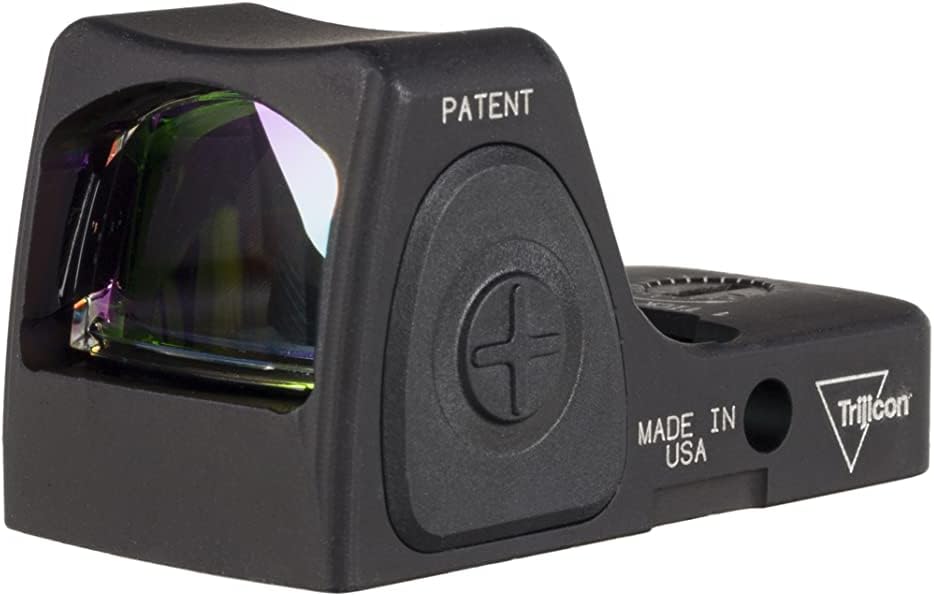
The RMRcc is the premium-duty option on this list. It is expensive, but its durability and recoil tolerance are genuinely exceptional on compact pistols.
Specs
- Forged aluminum housing
- 3.25 MOA dot options
- Waterproof construction
- Top-loading battery
- Proprietary slim footprint
- Multi-coated glass
Pros
- Outstanding durability
- Excellent glass clarity
- Reliable under recoil
- Minimal distortion
- Strong waterproof sealing
Cons
- Expensive
- Requires adapter plate on Max-9
The RMRcc feels substantially more rugged than most micro optics. The forged housing absorbs recoil impulses extremely well, and I experienced no flicker, zero shift, or mounting movement during repeated rapid-fire testing.
Glass quality is excellent with very little fisheye distortion. The dot appears crisp even under bright outdoor conditions, and the lens coatings handle glare effectively. The buttons are firm and tactile enough to manipulate with gloves.
Parallax performance is impressive. Even with imperfect head positioning, the dot stayed predictable at practical carry distances. The optic window is smaller than some competitors, but the tradeoff is improved housing strength.
Online discussions consistently highlight the RMRcc’s durability. Many concealed carriers trust it because of Trijicon’s long-standing reputation for combat-grade optics.
Mounting is the main drawback. The RMRcc uses its own footprint rather than true RMSc geometry, so the Ruger Max-9 usually requires an adapter plate. That slightly increases deck height and can affect co-witness alignment.
Best Red Dot for Ruger Max 9 buyers who prioritize maximum durability over cost should strongly consider the RMRcc.
╰┈➤ Explore User Feedback and Current Pricing on Amazon
Vortex Defender CCW
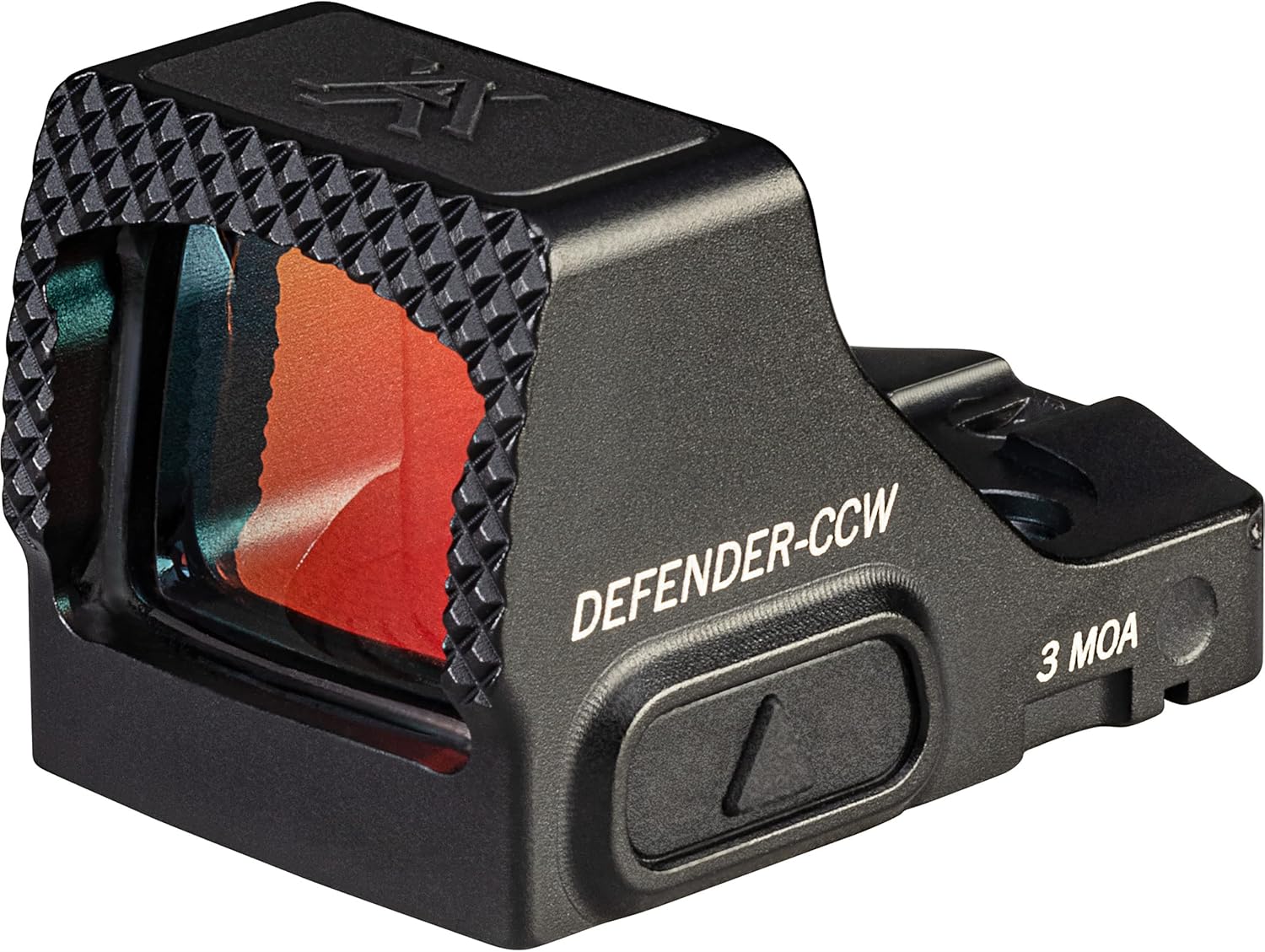
The Defender CCW surprised me because it offers many premium features at a mid-range price while maintaining excellent compatibility with slim carry pistols.
Specs
- Shield RMSc footprint
- Fast-rack front ledge
- Multiple dot sizes
- ShockShield polymer insert
- Waterproof housing
- Top-loading battery
Pros
- Strong value
- Crisp glass
- Aggressive front ledge
- Durable housing
- Excellent warranty
Cons
- Slightly thicker body
- Buttons are somewhat recessed
The first thing I noticed was the optic window. It feels surprisingly open for a compact carry optic, making rapid target acquisition easier during fast draw sequences. The lens tint is minimal, and edge clarity remains respectable across the viewing area.
The front ledge design is genuinely useful for one-handed slide manipulations. I tested it repeatedly against barricades and belt edges without damaging the housing. Recoil handling was also impressive for the price range.
Brightness controls are recessed enough to prevent accidental activation during concealed carry, although they are slightly harder to manipulate with gloves. Battery access is simple thanks to the top-loading tray.
Online users often compare the Defender CCW favorably against more expensive carry optics because of its combination of durability and warranty support. Many shooters also praise the clear glass and intuitive dot tracking.
Mounting compatibility is excellent because the optic follows the RMSc footprint standard closely. On most Ruger Max-9 slides, installation is simple and low-profile with no excessive overhang.
╰┈➤ Explore User Feedback and Current Pricing on Amazon
How I Tested / Evaluation Criteria
Parallax
I evaluated each optic by shooting from unconventional head positions at 7, 15, and 25 yards. Some micro dots show noticeable point-of-impact shift when the dot approaches the edge of the window. The better optics maintained consistent alignment even with imperfect presentation.
Enclosed optics generally controlled parallax better because the emitter remained protected from environmental contamination. Window geometry also mattered more than marketing claims.
Co-Witness and Deck Height
Deck height is critical on the Ruger Max-9 because excessive optic height can ruin natural presentation. I specifically looked for optics that preserved usable co-witness alignment with factory-height irons or minimal suppressor-height upgrades.
Low-profile optics also reduce concealment printing and improve recoil tracking.
Durability
I tested durability through repeated draw cycles, barricade manipulations, recoil strings, and environmental exposure. Aluminum housings clearly outperformed polymer bodies in long-term abuse scenarios.
Emitter sealing also became important during lint-heavy concealed carry testing.
Battery Performance
Battery access matters more than many shooters realize. Optics requiring full removal for battery replacement increase the chance of losing zero after maintenance.
I strongly favor side-loading or top-loading battery systems for defensive carry optics.
Brightness Range
Brightness settings were tested in direct sunlight, indoor ranges, and low-light environments. Several optics suffered from bloom at higher settings, while better units maintained crisp dot definition.
Night vision compatibility matters less on a concealed carry pistol, but daylight brightness absolutely matters.
Glass Quality
Lens tint, distortion, and edge clarity dramatically affect usability. Some compact optics show heavy fisheye distortion that slows target transitions.
The best optics balanced durability coatings with minimal color shift.
Controls Ergonomics
Small brightness buttons can become frustrating during stress or while wearing gloves. I evaluated tactile response, accidental activation resistance, and ease of adjustment under recoil conditions.
Mounting Ecosystem
The Ruger Max-9 primarily favors RMSc-pattern optics, but not all “RMSc-compatible” optics fit identically. I considered plate requirements, recoil lug engagement, screw compatibility, and aftermarket support availability.
How to Choose the Right Red Dot for This Gun
The Ruger Max-9 occupies an interesting space in the concealed carry market because it is slim enough for deep concealment while still large enough to benefit substantially from a quality optic. That means choosing the right sight involves more than simply picking the most durable or most expensive option available.
The first factor I always consider is footprint compatibility. The Max-9 is built around the RMSc footprint family, which immediately favors compact optics like the EPS Carry, 507K, RMSc, RomeoZero, and Defender CCW. Optics requiring adapter plates can still work well, but increased deck height affects both concealment and natural presentation.
Window size is another major factor. Larger windows help newer shooters track the dot during recoil, but oversized optics can overhang the slide and print more aggressively during concealed carry. I usually recommend balancing concealment against acquisition speed rather than chasing the biggest possible window.
Enclosed versus open emitters also matters. Open emitters are lighter and often less expensive, but they collect lint, sweat, dust, and moisture during everyday carry. Enclosed optics like the EPS Carry dramatically reduce these issues and generally provide better long-term reliability in harsh environments.
Battery access design is something many buyers overlook. Bottom-mounted batteries are frustrating on carry guns because removing the optic increases the likelihood of losing zero. Side-loading and top-loading battery systems are significantly more practical.
Durability expectations should also match your use case. Casual range shooters may be perfectly satisfied with lightweight polymer optics, while heavy training schedules justify stronger aluminum housings.
Finally, think carefully about co-witness alignment. The Ruger Max-9 handles best when the optic sits low enough to preserve intuitive presentation. Excessive optic height often forces shooters to “hunt” for the dot during rapid draws.
FAQs
Does the Ruger Max-9 use the RMSc footprint?
Yes. The Ruger Max-9 is optics-ready and primarily designed around the RMSc footprint pattern used by many micro red dots.
Can the Holosun 507K fit directly on the Ruger Max-9?
Usually yes, although some slide revisions may require minor fitting or a compatible adapter plate because the K footprint differs slightly from standard RMSc dimensions.
Are enclosed emitter optics worth it on a carry pistol?
Absolutely. Enclosed emitters reduce lint, sweat, moisture, and debris interference, making them especially valuable for everyday concealed carry.
Do I need suppressor-height sights with these optics?
Not always. Several low-profile optics on this list can maintain partial co-witness with factory-height irons depending on mounting configuration.
Which optic is best for durability?
The Trijicon RMRcc is the most rugged optic in this guide, while the EPS Carry offers an excellent balance between durability, compactness, and carry practicality.
Conclusion
Choosing the right optic for the Ruger Max-9 comes down to balancing concealment, durability, mounting simplicity, and shooting performance. Some shooters will prioritize enclosed emitters for daily carry reliability, while others may prefer lighter optics with lower deck height and faster presentation characteristics.
After extensive testing, the EPS Carry and 507K stand out as the most balanced overall options for most concealed carriers. The RMRcc remains the premium-duty choice, while the Defender CCW delivers outstanding value.
For shooters searching for the Best Red Dot for Ruger Max 9, compatibility matters just as much as optical performance, and selecting the correct footprint-ready optic will dramatically improve both reliability and everyday usability.
Sources: Trijicon product data, Holosun technical specifications, Ruger Max-9 optics mounting documentation, RMSc footprint references, Reddit concealed carry discussions, and long-term user range reports.