6 Outstanding Red Dots for the SIG P365 XMacro in 2026
Best Red Dot for Sig P365 Xmacro is no longer just about finding the smallest optic that fits the slide. The P365 XMacro has become one of the most capable concealed carry pistols on the market, which means shooters now expect duty-grade durability, fast target acquisition, reliable co-witness capability, and low-profile mounting without sacrificing concealment.
I’ve spent substantial range time running optics on the XMacro platform, including direct-mounted RMSc-footprint sights, enclosed emitters, and larger competition-style windows. The XMacro’s slim profile and aggressive recoil impulse expose weaknesses quickly. Some optics lose zero after extended strings, some sit too high for an effective iron sight picture, and others suffer noticeable lens distortion under rapid presentation.
The good news is that several optics now pair exceptionally well with the XMacro’s optics-ready slide. Below are the six models I believe currently deliver the best balance of mounting compatibility, durability, carry practicality, and shooting performance.
Top Product List: SIG P365 XMacro Optics
HOLOSUN EPS CARRY
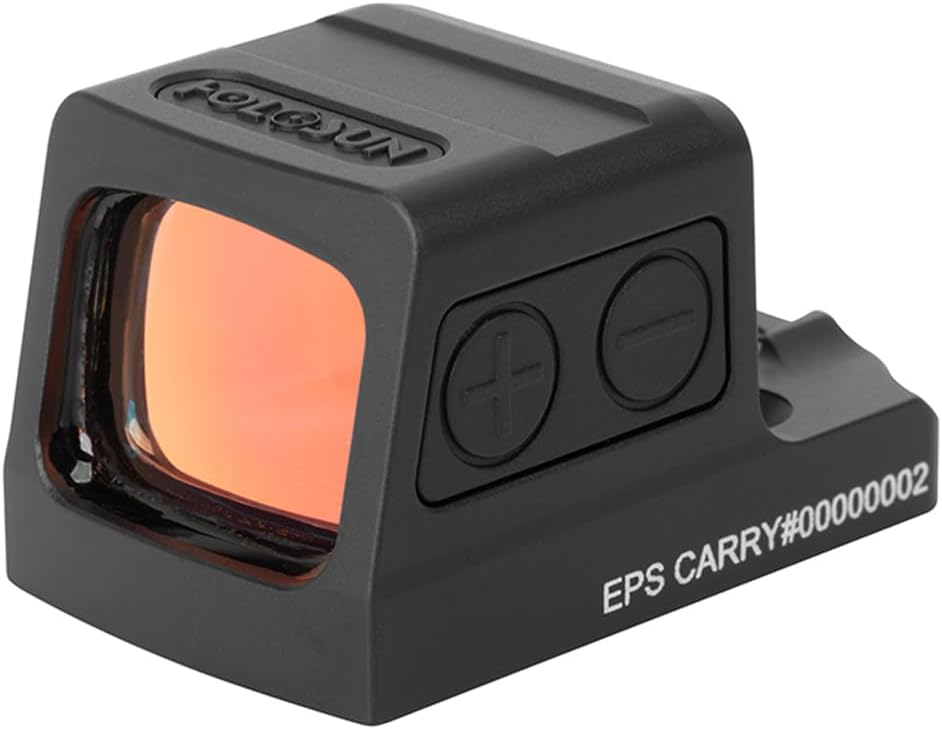
The EPS Carry is the optic I currently trust most on the XMacro platform for daily concealed carry. Its enclosed emitter design dramatically reduces debris-related failures while maintaining a slim carry footprint.
Specs
- RMSc/K footprint
- Enclosed emitter
- 2 MOA dot or MRS reticle
- 7075 aluminum housing
- Side battery tray
- IPX8 waterproofing
Pros
- Excellent weather sealing
- Minimal lint obstruction
- Crisp glass clarity
- Low deck height
- Strong battery life
Cons
- Slight green lens tint
- Brightness buttons feel small with gloves
In live fire, the EPS Carry tracks recoil extremely well on the XMacro. I noticed very little parallax shift inside realistic defensive distances, and the optic window remains easy to reacquire during rapid transitions. The enclosed emitter is the biggest advantage here. Sweat, lint, and moisture simply matter less compared to open-emitter designs.
The side battery tray is also genuinely useful because I can replace the battery without removing the optic and disturbing zero. Button tactility is positive, although slightly shallow with thicker gloves.
Online discussions consistently praise the EPS Carry for reliability and durability. Many users transitioning from the 507K mention cleaner maintenance and better confidence in adverse conditions. The optic has also built a strong reputation for retaining zero after extended round counts.
Mounting is straightforward. The P365 XMacro accepts the K-pattern footprint directly, though some slide generations may require specific screws depending on manufacturing revision.
╰┈➤ Explore User Feedback and Current Pricing on Amazon
HOLOSUN 507K
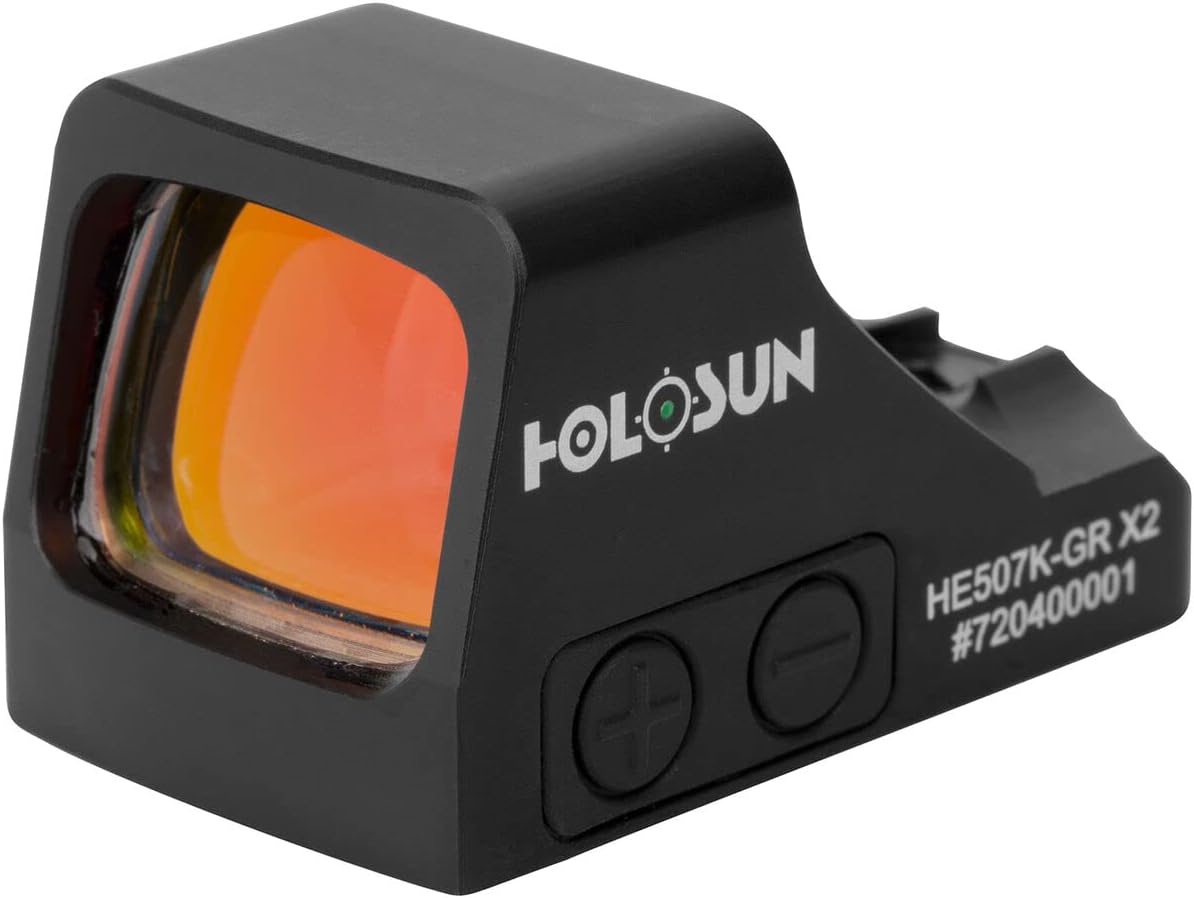
The 507K remains one of the best all-around carry optics for shooters who want flexibility, a compact footprint, and a highly refined reticle system.
Specs
- Modified RMSc footprint
- Multi-reticle system
- Solar fail-safe
- Side battery compartment
- 7075 aluminum body
- Shake-awake technology
Pros
- Outstanding value
- Multiple reticle options
- Very compact
- Good brightness range
- Durable housing
Cons
- Open emitter collects debris
- Slightly busy reticle for some users
I’ve run the 507K extensively on slim carry pistols, and it balances extremely well on the XMacro. The optic window is compact but usable, especially once presentation consistency improves. The 32 MOA ring combined with the center dot makes rapid pickup noticeably easier during fast draws.
Glass quality is respectable with only moderate tinting. There is mild edge distortion at aggressive viewing angles, but nothing significant during actual shooting. Under recoil, the optic holds tracking well, and the low deck height allows a usable co-witness with factory-height sights.
The controls are one area where Holosun continues to perform well. The buttons are tactile enough for gloved manipulation without becoming overly exposed. Battery access from the side tray is another major convenience advantage.
Across forums and Reddit discussions, the 507K is widely considered one of the safest purchases for micro-compact pistols. Shooters appreciate its balance between price and reliability, particularly for concealed carry applications.
Mounting compatibility is excellent with the XMacro because the optic uses the K-series footprint. Direct mounting keeps the setup low and streamlined without requiring bulky adapter plates.
╰┈➤ Explore User Feedback and Current Pricing on Amazon
Best Red Dot for Sig P365 Xmacro Mounting Considerations
The XMacro’s optics-ready slide uses a footprint closely aligned with the Shield RMSc and Holosun K-pattern ecosystem. That matters because direct mounting significantly improves durability, co-witness height, and recoil control compared to plate-mounted systems.
A low-mounted optic helps maintain a natural presentation angle while reducing the “searching for the dot” issue common with taller setups. I strongly recommend prioritizing optics specifically designed around the slimline carry footprint rather than adapting full-size RMR optics unless you have a specialized use case.
SIG ROMEO-X Compact
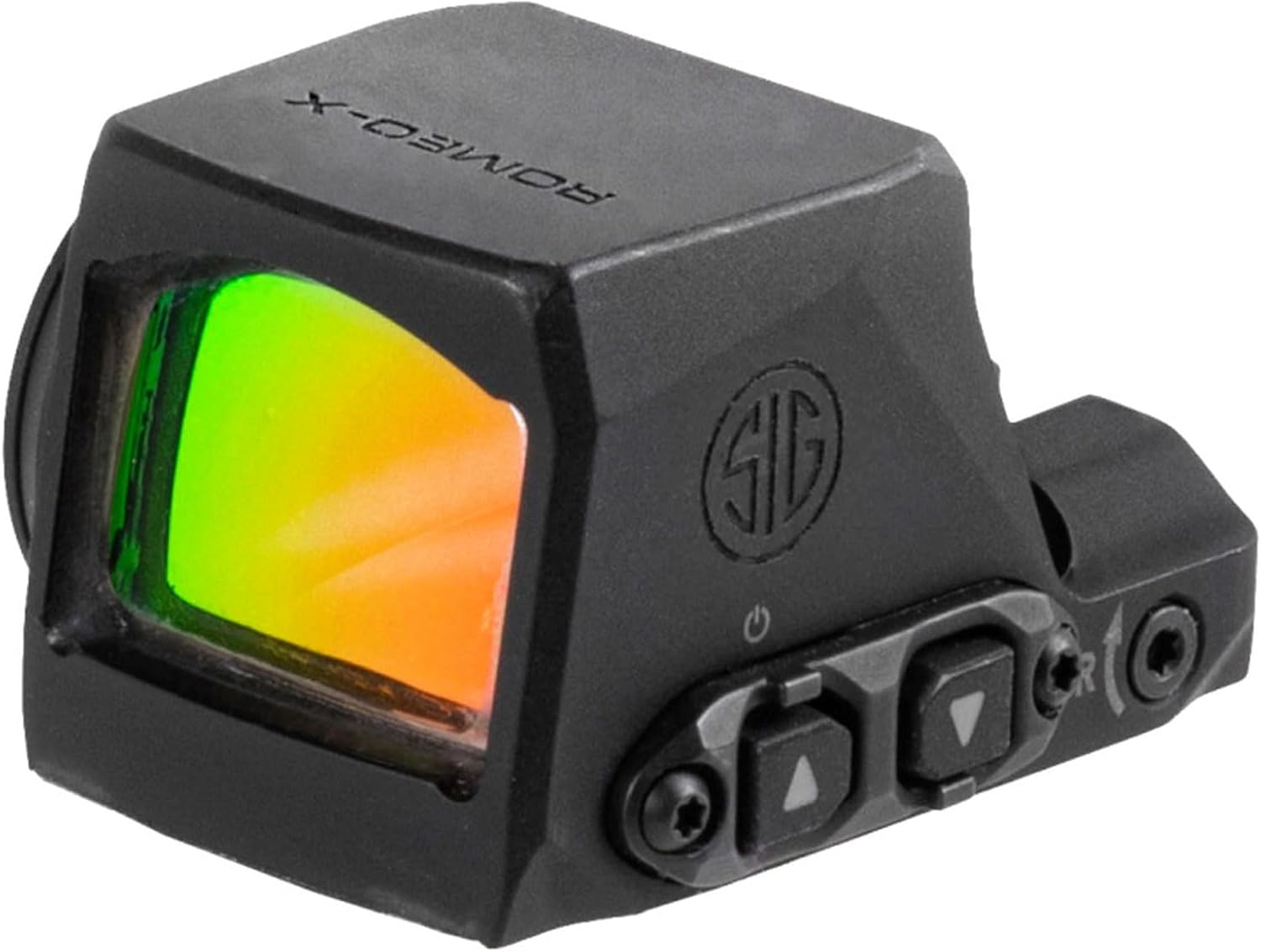
The ROMEO-X Compact feels purpose-built for the XMacro platform. SIG designed it specifically around modern slimline carry pistols, and that integration shows immediately.
Specs
- Compact RMSc footprint
- CNC aluminum housing
- Aspheric glass lens
- Side battery compartment
- Multiple brightness settings
- Backup rear sight notch
Pros
- Excellent factory integration
- Clear glass
- Very low deck height
- Strong brightness performance
- Good iron sight compatibility
Cons
- Premium pricing
- Smaller window than competition optics
The first thing I noticed with the ROMEO-X Compact was how naturally it aligns with the XMacro slide geometry. The optic sits extremely low, producing one of the best co-witness setups available without suppressor-height irons.
Glass quality is impressive with minimal blue tint and strong edge clarity. The dot itself appears crisp even during rapid target transitions. I also appreciate the recessed emitter design, which helps reduce emitter occlusion from debris compared to fully exposed systems.
Under recoil, the optic tracks consistently without visible flickering or housing movement. The brightness controls are firm and tactile enough for positive adjustments with gloves. Battery replacement is simple thanks to the side-loading compartment.
Online feedback has been increasingly positive, especially among shooters wanting a factory-optimized carry setup. Many users specifically highlight the clean mounting interface and low-profile appearance.
The mounting system is where this optic truly excels. It integrates directly with the XMacro slide footprint without awkward spacing or oversized adapter solutions, preserving concealability and improving mechanical reliability.
╰┈➤ Explore User Feedback and Current Pricing on Amazon
Trijicon RMRcc
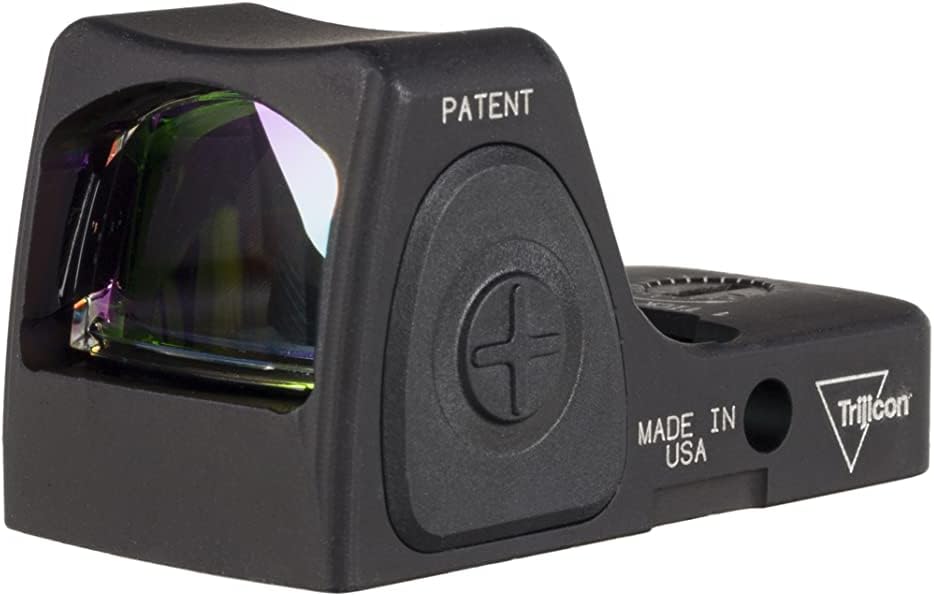
The RMRcc brings Trijicon’s proven durability philosophy into the concealed carry category with a slimmer housing specifically designed for compact pistols.
Specs
- Proprietary slim footprint
- Forged aluminum housing
- Top-loading battery
- Adjustable LED
- Waterproof construction
- Multiple MOA options
Pros
- Exceptional durability
- Strong recoil resistance
- Crisp dot clarity
- Reliable sealing
- Excellent durability reputation
Cons
- Requires mounting plate
- Smaller window than EPS Carry
The RMRcc feels incredibly solid on the XMacro. The forged housing inspires confidence immediately, especially for hard-use carry or defensive applications. During recoil testing, the optic remained stable even through prolonged strings and higher-pressure defensive loads.
The glass is clearer than many older Trijicon optics, though there is still some tint visible in bright environments. Dot intensity remains excellent outdoors, and brightness adjustments are responsive and predictable.
One thing I particularly like is the top-loading battery compartment. Battery swaps are easy without removing the optic. The controls also maintain positive tactile feedback even with wet hands or gloves.
Online discussions consistently focus on durability. Many concealed carriers choose the RMRcc specifically because they trust Trijicon’s long-term reliability record. The optic may not offer the largest viewing window, but it compensates with ruggedness.
The downside is mounting compatibility. Unlike K-footprint optics, the RMRcc typically requires an adapter plate on the XMacro, which increases deck height slightly and reduces the clean factory-style fit.
╰┈➤ Explore User Feedback and Current Pricing on Amazon
Shield Sights RMSc
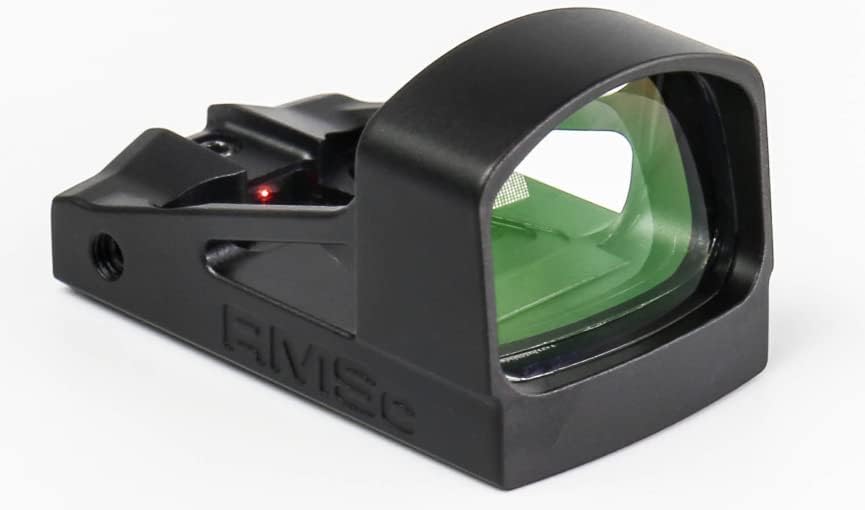
The RMSc helped establish the modern micro red dot category and still pairs extremely well with slim concealed carry pistols like the XMacro.
Specs
- Original RMSc footprint
- Polymer lens
- Ultra-lightweight construction
- Automatic brightness adjustment
- Slim carry profile
- Low deck height
Pros
- Extremely lightweight
- Direct-mount compatibility
- Natural presentation
- Minimal printing
- Simple controls
Cons
- Polymer lens scratches easier
- Auto-brightness can be inconsistent
The RMSc remains one of the lowest-profile optics available for slim carry pistols. On the XMacro, the optic almost disappears into the slide profile, making concealed carry especially comfortable.
Its lightweight construction noticeably reduces slide mass changes during recoil. The dot tracks naturally, and the low mounting position creates one of the easiest presentations for shooters transitioning from iron sights.
The downside is durability compared to newer enclosed-emitter optics. The polymer lens requires careful maintenance, and I noticed more susceptibility to glare under harsh sunlight. Automatic brightness adjustment can also lag during rapid transitions between dark and bright environments.
That said, many experienced carriers still appreciate the RMSc because of its simplicity and minimal size. Online users often mention its excellent concealment characteristics and natural sight alignment.
Mounting compatibility is excellent because the XMacro footprint was heavily influenced by the RMSc standard. Direct mounting keeps the optic extremely low while preserving strong co-witness capability.
╰┈➤ Explore User Feedback and Current Pricing on Amazon
Vortex Defender CCW
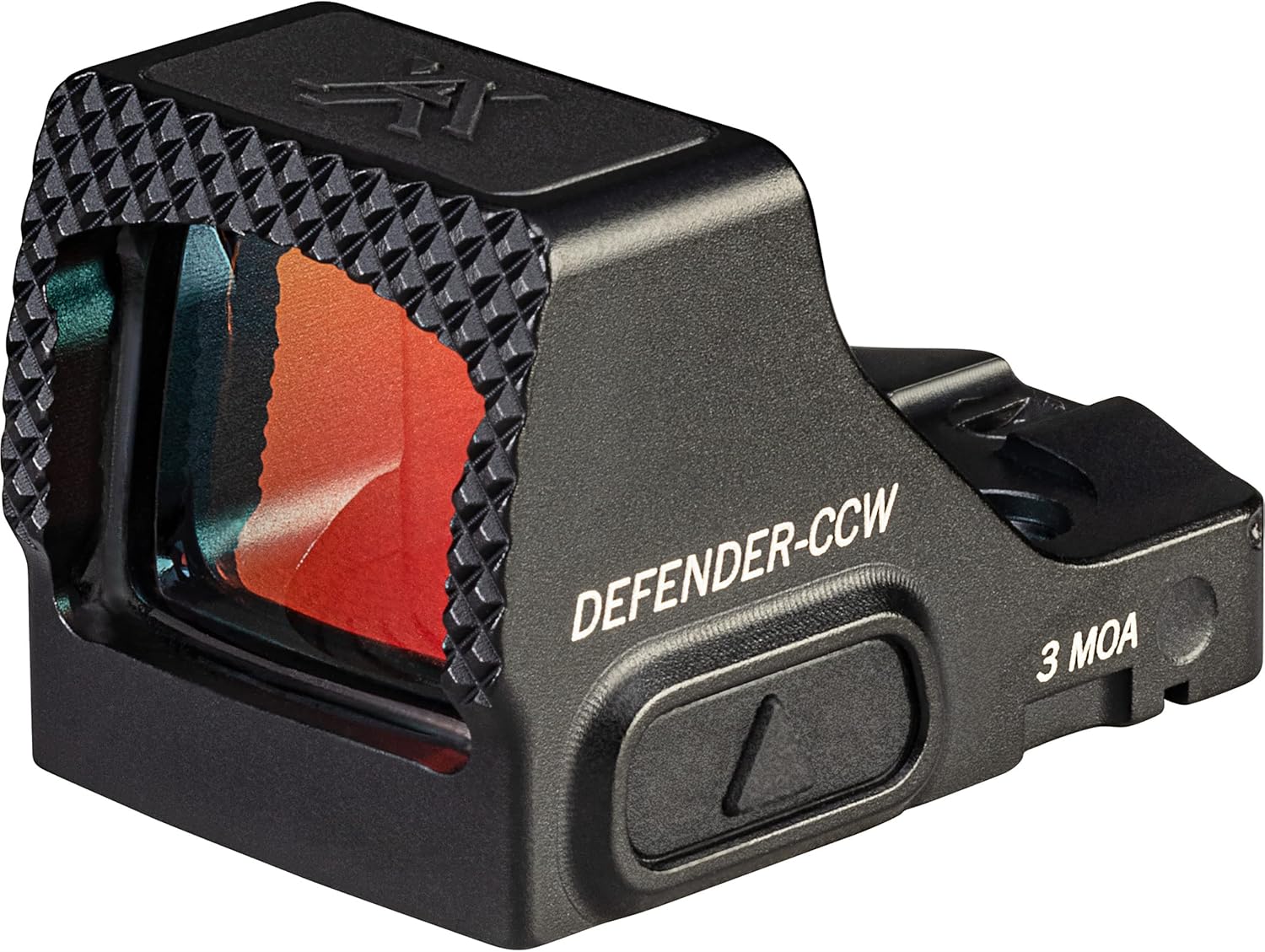
The Defender CCW surprised me with how refined it feels for the price point. Vortex clearly designed it specifically for modern carry pistols rather than adapting a larger competition optic.
Specs
- Shield RMSc footprint
- Fast-rack textured front
- Top-loading battery
- Multi-coated lens
- Motion activation
- Aluminum housing
Pros
- Competitive pricing
- Strong warranty
- Large usable window
- Easy battery replacement
- Good tactile controls
Cons
- Slightly bulkier profile
- Brightness buttons protrude more than competitors
The Defender CCW offers one of the more forgiving sight pictures in this category. The window shape makes dot acquisition fast during aggressive draws, especially for newer red dot shooters.
I found recoil tracking surprisingly stable on the XMacro. There was minimal visible distortion, and the optic maintained zero throughout repeated range sessions. The textured front face is also useful for emergency slide manipulation against barriers or belts.
Glass quality is respectable with moderate tinting. The emitter remains reasonably clean under normal carry conditions, though open emitters naturally require more maintenance than enclosed systems. Brightness adjustments are easy to manipulate with gloves due to the larger control surfaces.
Community feedback has been strong, especially from users wanting an affordable carry optic backed by Vortex’s warranty support. Many shooters compare its performance favorably against more expensive micro optics.
Mounting is straightforward because the Defender CCW uses the RMSc footprint. The optic sits low enough for an effective co-witness setup without compromising concealability.
╰┈➤ Explore User Feedback and Current Pricing on Amazon
How I Tested / Evaluation Criteria
Parallax Performance
I evaluated each optic at varying presentation angles between 5 and 25 yards. While all pistol optics exhibit some parallax shift, the better designs minimized visible deviation during rapid transitions and unconventional shooting positions. Enclosed emitters generally performed more consistently because debris could not partially obscure the emitter source.
Co-Witness and Deck Height
Deck height matters enormously on the XMacro because excessive optic height disrupts natural presentation. I prioritized optics that allowed usable iron sight visibility without suppressor-height sights while maintaining a low slide profile for concealed carry comfort.
Durability
I focused heavily on recoil resistance and housing integrity. The XMacro’s recoil impulse exposes weak mounting systems quickly, especially during rapid-fire strings. I also evaluated water sealing, emitter protection, and long-term zero retention.
Battery System
Top-loading and side-loading batteries received higher marks because they eliminate the need to remove the optic during replacement. Motion-activated systems also help preserve runtime while maintaining immediate readiness.
Brightness Range
A carry optic must remain visible in bright daylight without excessive bloom indoors. I tested each model across mixed lighting conditions, including outdoor sun, low-light indoor ranges, and transitional environments.
Glass Quality
Lens tint, distortion, and edge clarity all influence practical shooting performance. Some optics developed fisheye distortion near the edges while others maintained a flatter, cleaner sight picture during recoil tracking.
Controls and Ergonomics
Button placement matters more than many shooters realize. Tiny recessed controls may reduce accidental activation, but they become frustrating with gloves or wet hands. The best optics balanced accessibility with protection.
Mounting Ecosystem
Direct mounting is ideal for the XMacro platform. Plate systems increase height and add potential failure points. I favored optics using RMSc or Holosun K-pattern compatibility for the cleanest integration.
How to Choose the Right Red Dot for This Gun
The XMacro sits in an interesting category because it bridges the gap between a traditional micro-compact and a full fighting pistol. That means the ideal optic depends heavily on how you actually intend to use the gun.
For daily concealed carry, I strongly prefer compact optics with low deck height and minimal overhang. Slim optics preserve concealment and reduce snagging during draws from concealment garments. Direct mounting also improves long-term reliability because fewer components exist between the slide and optic body.
Enclosed emitters have become increasingly important for serious carry use. Pocket lint, sweat, rain, and debris can obstruct open emitters surprisingly quickly. The EPS Carry currently leads this category because it combines enclosed protection with a slim footprint optimized for carry pistols.
Window size is another balancing act. Larger windows improve target acquisition speed but also increase bulk. Many shooters initially prefer oversized windows before realizing that proper presentation technique matters more than raw window dimensions.
Battery access should not be overlooked. Removing an optic to replace a battery creates opportunities for torque inconsistency and zero shift. Side-loading or top-loading battery systems simplify maintenance significantly.
Co-witness compatibility also matters. A lower-mounted optic preserves a more natural presentation while maintaining usable backup irons. Excessively tall optics can force awkward head positioning during rapid draws.
Finally, durability should match your intended use. A range-only optic may not need full duty-grade sealing or reinforced housings. However, for defensive carry, I prioritize rugged construction, waterproofing, and proven recoil resistance over extra features.
The XMacro deserves an optic that complements its balance of concealability and shootability rather than overwhelming the pistol with unnecessary size or weight.
FAQs
Does the SIG P365 XMacro use an RMSc footprint?
Yes. The XMacro slide is compatible with RMSc-style optics and Holosun K-pattern variants, though some optics may require specific screws or minor fitting depending on production generation.
Are enclosed emitters worth it on a carry gun?
Absolutely. Enclosed emitters dramatically reduce the chance of lint, moisture, or debris blocking the emitter during daily carry.
Can the XMacro co-witness with factory sights?
Many low-profile optics allow partial co-witness with factory-height irons, especially optics like the EPS Carry and ROMEO-X Compact.
Is the Trijicon RMRcc direct mount compatible?
Typically no. The RMRcc generally requires an adapter plate because it uses a proprietary footprint rather than the RMSc/K pattern.
Which optic has the best value overall?
The Holosun 507K remains one of the strongest value options because it combines durability, reticle flexibility, and direct-mount compatibility at a competitive price.
Conclusion
After extensive testing, I believe the Best Red Dot for Sig P365 Xmacro depends largely on whether you prioritize concealment, durability, or environmental protection. For most concealed carriers, the HOLOSUN EPS Carry currently offers the best balance of reliability, mounting simplicity, low-profile carry comfort, and defensive practicality. However, shooters wanting maximum ruggedness may prefer the RMRcc, while those seeking the cleanest factory integration will appreciate the ROMEO-X Compact.